


E-commerce revenue worldwide is projected to exceed $7 trillion in 2026, yet the failure rate for new online stores remains stubbornly high. The difference between stores that thrive and those that struggle is not luck or even product quality alone. It is the sum of hundreds of strategic decisions about technology, design, marketing, and operations that compound into either a frictionless buying experience or a frustrating one.
This guide covers the key factors that determine e-commerce success in 2026, from choosing the right technical foundation to the AI-powered personalization strategies that top stores use to maximize revenue per visitor.
Choosing Your E-commerce Platform
| Platform | Best For | Starting Cost | Scalability |
|---|---|---|---|
| Shopify | SMEs, quick launch | $39/mo | High |
| WooCommerce | Flexibility, WordPress | Free + hosting | Medium |
| Headless (Medusa) | Custom experiences | Dev costs | Very High |
| BigCommerce | Mid-market | $39/mo | High |
| Magento | Enterprise | $22k+/yr | Very High |
Your platform choice is the most consequential technical decision you will make. It determines your design flexibility, performance ceiling, feature availability, and long-term scalability.
Shopify remains the dominant platform for SMEs and mid-market businesses, powering over 4 million stores globally. Its strength lies in its ecosystem: thousands of apps, themes, and integrations that allow you to build sophisticated functionality without custom development. Shopify's AI features, including Shopify Magic for product descriptions and Sidekick for store management, have made it even more accessible.
WooCommerce on WordPress offers maximum flexibility for businesses that need highly customized functionality. It is open-source, endlessly extensible, and gives you complete control over your data and hosting. The tradeoff is that it requires more technical management and CMS development expertise.
Headless commerce architectures using platforms like Medusa, Saleor, or Shopify Hydrogen are gaining traction among businesses that need maximum performance and design flexibility. By decoupling the frontend presentation layer from the backend commerce engine, headless architectures enable blazing-fast storefronts built with modern frameworks like Next.js or Remix. Our web application development team builds headless commerce solutions for businesses that have outgrown traditional platforms.
The right choice depends on your budget, technical resources, growth ambitions, and customization needs. A business doing under $1M in annual revenue will typically be best served by Shopify. A business with complex requirements or very high traffic may benefit from a custom or headless approach.
User Experience: Where Revenue Is Won or Lost
| UX Element | Impact on Conversion | Priority |
|---|---|---|
| Page load speed (< 2s) | +32% conversion | Critical |
| Mobile optimization | +67% mobile sales | Critical |
| Search & filtering | +43% product discovery | High |
| Product image quality | +40% engagement | High |
| Simplified checkout | +35% completion | Critical |
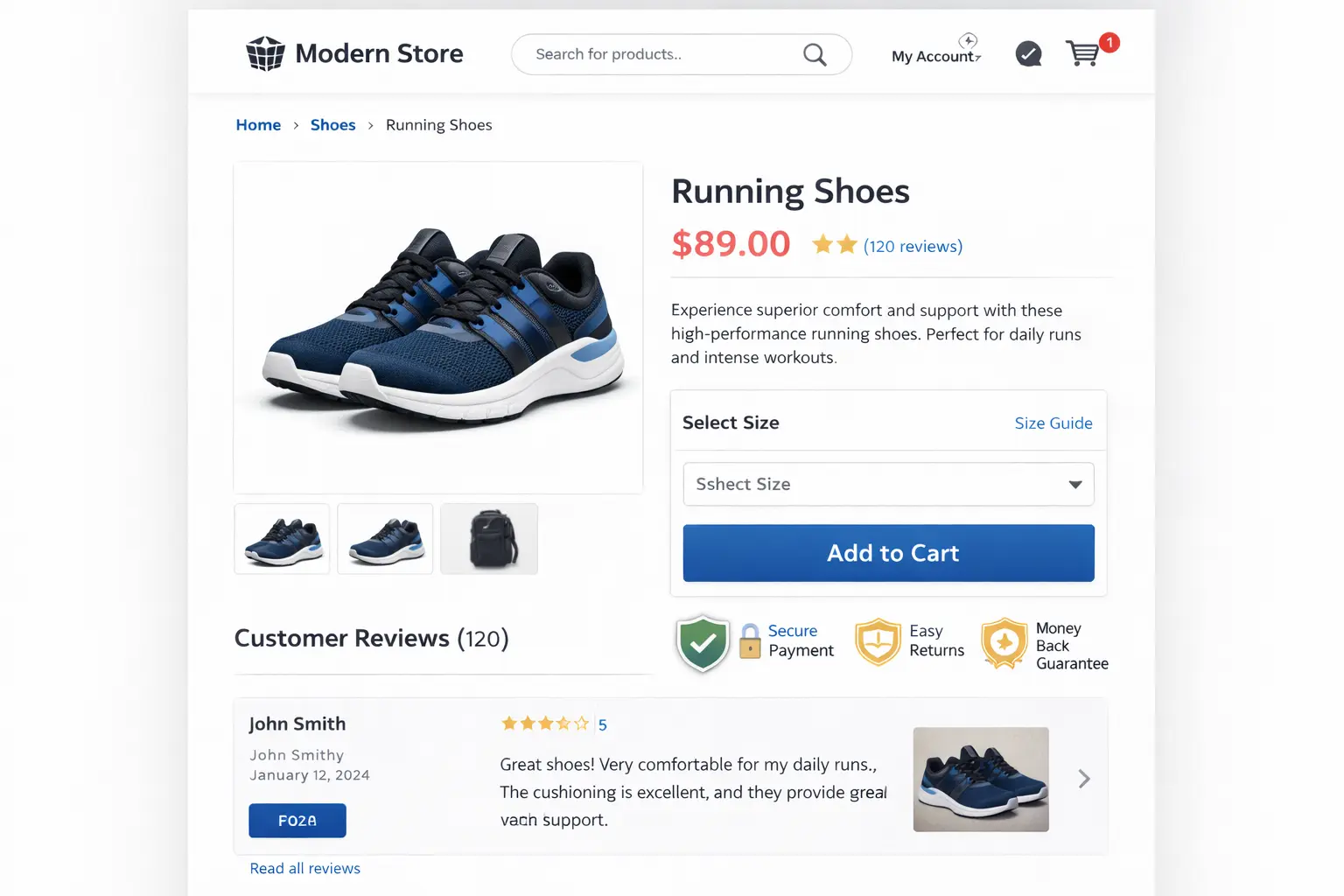
The design and usability of your store directly determines your conversion rate. A well-designed e-commerce site converts at 3-5%, while a poorly designed one struggles to reach 1%. On $1M in traffic, that difference represents hundreds of thousands of dollars in revenue.
Navigation must be intuitive. Users should find any product within three clicks from the homepage. Use clear category structures, prominent search functionality, and breadcrumb navigation. Implement predictive search that shows product suggestions as users type, which can increase search-driven conversions by 30% or more.
Product pages must sell. Each product page should include multiple high-quality images (ideally including 360-degree views or 3D models), a clear price, detailed specifications, a compelling description that addresses benefits rather than just features, and visible customer reviews. The "Add to Cart" button should be prominent and always visible without scrolling.
Mobile experience is paramount. Over 70% of e-commerce traffic now comes from mobile devices, yet mobile conversion rates are typically half of desktop. The stores that close this gap invest in mobile-first design with thumb-friendly navigation, streamlined mobile checkout, and fast page loads on cellular connections. Our custom website development team designs mobile-first e-commerce experiences that convert.
Page speed directly impacts revenue. Research from Deloitte found that a 0.1-second improvement in mobile site speed increased conversion rates by 8.4% for retail sites. Optimize images with AVIF/WebP formats, implement lazy loading, minimize JavaScript, and use edge caching to serve content from servers closest to your customers.
AI-Powered Personalization
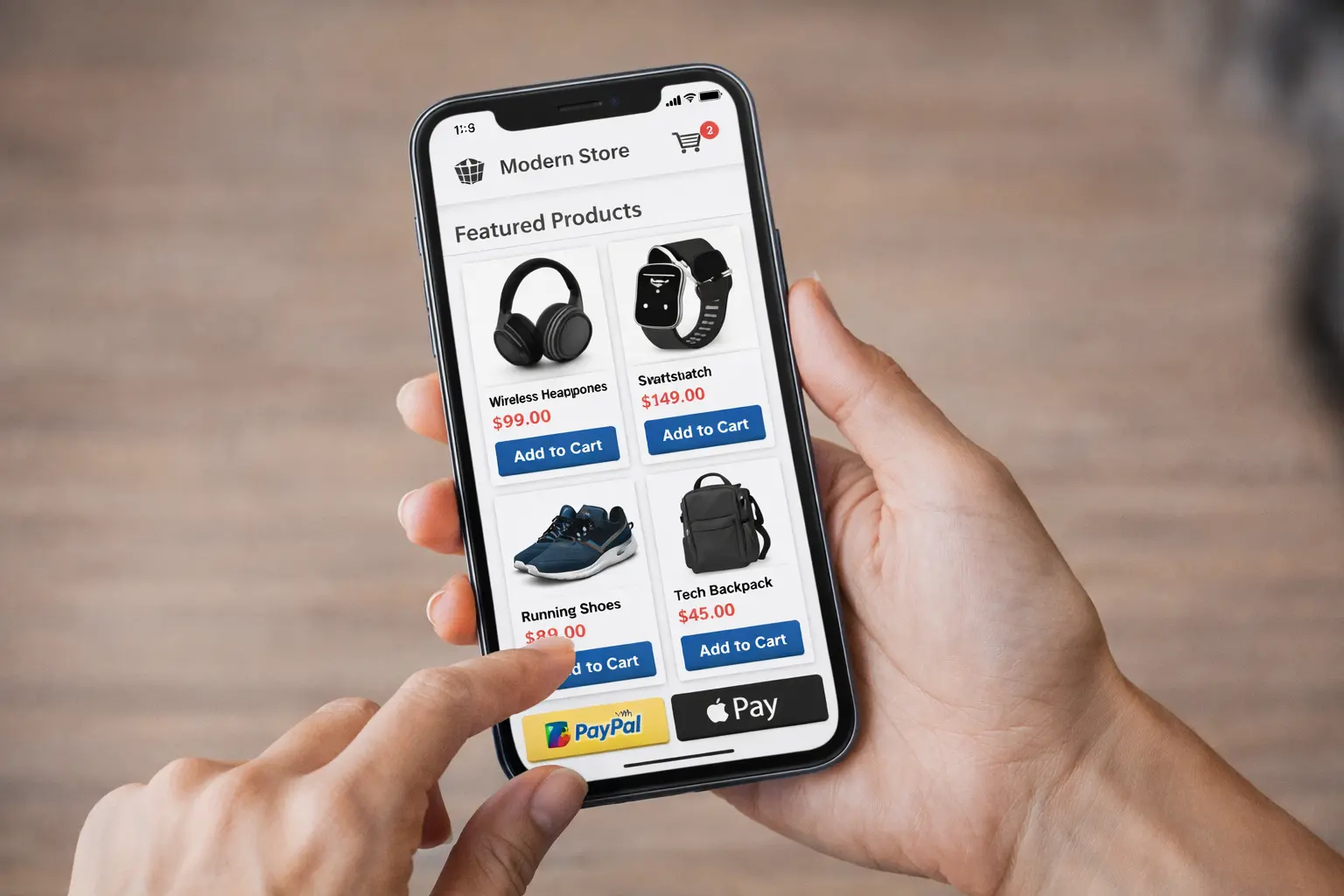
Personalization is no longer a nice-to-have. In 2026, the top e-commerce stores deliver experiences tailored to each visitor based on their behavior, preferences, and purchase history. AI-powered recommendation engines drive 35% of Amazon's revenue, and similar technology is now accessible to businesses of every size.
Product recommendations should appear on product pages ("Customers also bought"), on the homepage ("Recommended for you"), in the cart ("Complete your look"), and in post-purchase emails. AI systems analyze browsing patterns, purchase history, and similar customer behavior to surface the most relevant suggestions.
Dynamic pricing and offers adjust in real time based on inventory levels, customer segments, and competitive landscape. A first-time visitor might see a welcome discount, while a returning customer sees personalized bundles based on their purchase history.
Personalized search results reorder product listings based on individual user preferences. If a customer consistently buys premium products, search results prioritize premium options. This subtle personalization significantly improves the relevance of every search.
AI-powered chatbots handle customer service at scale, answering product questions, providing order status updates, and guiding purchase decisions 24/7. The latest conversational AI can handle complex product comparisons and nuanced recommendations that previously required human sales assistance.
Social Commerce: Selling Where Your Customers Already Are
The boundary between social media and e-commerce has effectively dissolved. In 2026, social commerce represents over 20% of total e-commerce revenue globally, and the percentage is growing rapidly.
Instagram and TikTok Shops allow customers to browse and purchase products without ever leaving the social app. The entire buying journey, from discovery through checkout, happens within the platform. Businesses that activate social shopping features see an average 30% increase in conversion rate compared to redirecting users to an external website.
Live shopping combines entertainment with commerce, creating interactive buying experiences where hosts demonstrate products, answer questions in real time, and offer time-limited deals. This format has been massive in Asian markets and is now gaining significant traction in the West.
User-generated content (UGC) has become the most trusted form of product marketing. Encourage customers to share photos and videos with your products, then feature this content on your product pages and social profiles. UGC converts at rates 5-7x higher than professional brand content because it provides authentic social proof.
Integrating social commerce with your main store requires a unified inventory and order management system. Our e-commerce development services ensure that your social selling channels sync seamlessly with your primary storefront.
Conversion Rate Optimization
Cart Abandonment Rate by Industry (2026)
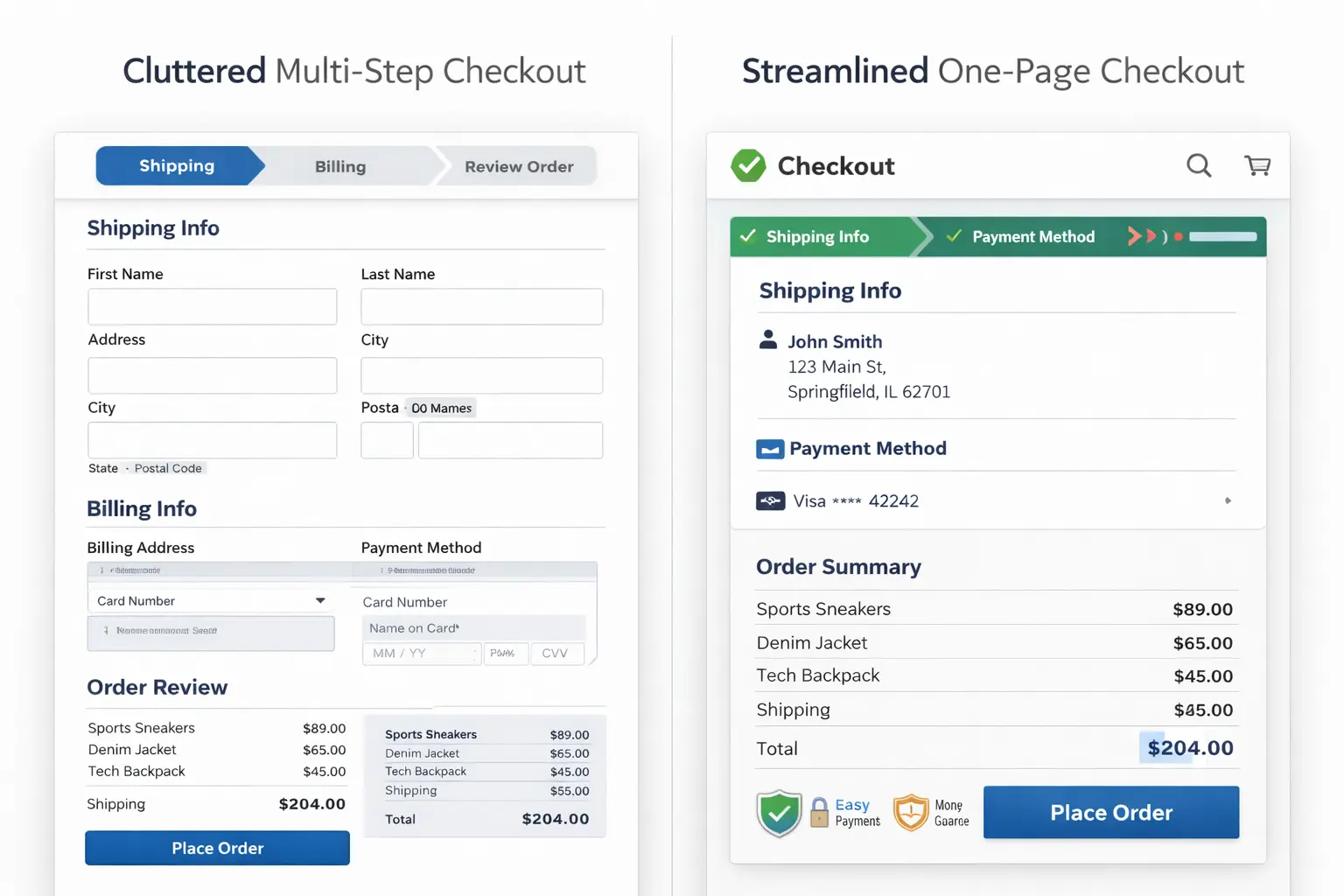
Driving traffic to your store is expensive. Conversion rate optimization (CRO) ensures you extract maximum revenue from the visitors you already have, which is almost always more cost-effective than acquiring new traffic.
Simplify checkout to the absolute minimum. Every additional step in your checkout flow costs you conversions. Offer guest checkout (do not force account creation), minimize form fields, support autofill, and show clear progress indicators. One-page checkout or one-click purchasing should be your goal.
Payment flexibility directly impacts conversion rates. Support multiple payment methods including credit cards, Apple Pay, Google Pay, PayPal, and Buy Now, Pay Later options like Klarna or Afterpay. BNPL services have been shown to increase average order value by 20-30% while reducing cart abandonment.
Trust signals reduce purchase anxiety. Display security badges, satisfaction guarantees, clear return policies, and real customer reviews prominently throughout the buying journey. Show estimated delivery dates on product pages and in the cart.
Cart abandonment recovery is one of the highest-ROI tactics available. The average cart abandonment rate is approximately 70%, meaning seven out of ten shoppers who add items to their cart leave without purchasing. Automated email sequences triggered within an hour of abandonment can recover 10-15% of these lost sales. Combine email recovery with retargeting ads for maximum effect.
Product Photography and Visual Content
In e-commerce, customers cannot touch, hold, or try your products. Your visual content must bridge this sensory gap. Investment in product photography is not optional; it is one of your highest-ROI expenses.
Professional product photography on clean backgrounds with consistent lighting is the minimum standard. Include multiple angles, close-up detail shots, and lifestyle images showing products in use. For apparel, show items on diverse body types.
3D product viewers and AR try-on have moved from novelty to expectation in categories like furniture, eyewear, cosmetics, and fashion. WebXR technology allows customers to visualize products in their own space using just their smartphone camera, which reduces return rates significantly.
Video content for products, including unboxing videos, tutorials, and comparison reviews, significantly increases time on page and conversion rates. Even simple 15-second product demo videos can increase add-to-cart rates by 25% or more.
Reviews, Ratings, and Social Proof
Customer reviews are the most influential factor in online purchasing decisions, with 93% of consumers saying reviews impact their buying choices. Building a robust review ecosystem is essential.
Implement automated review requests sent 7-14 days after delivery, when customers have had time to experience the product. Make the review process as simple as possible, one click to rate, optional text.
Display reviews prominently on product pages, including both positive and negative reviews. Counter-intuitively, a perfect 5.0 rating can hurt conversion rates because it appears inauthentic. A rating between 4.2 and 4.7 with some honest negative reviews builds more trust than perfection.
Respond to negative reviews professionally and constructively. This demonstrates that you care about customer satisfaction and are willing to resolve issues, which actually builds trust with prospective buyers reading the exchange.
Showcase user-generated content alongside professional reviews. Photos and videos from real customers carry more persuasive weight than polished brand imagery.
Logistics, Shipping, and Returns
The post-purchase experience, meaning shipping speed, packaging quality, and return ease, is now a competitive differentiator that directly impacts repeat purchase rates and lifetime customer value.
Fast shipping is expected. Amazon has conditioned consumers to expect 1-2 day delivery, and while matching this is challenging for SMEs, you must at least offer clear delivery estimates and multiple shipping speed options. Free shipping thresholds ("Free shipping on orders over $75") remain one of the most effective tactics for increasing average order value.
Clear return policies reduce purchase hesitation. Make your return policy easy to find, easy to understand, and genuinely customer-friendly. A generous return policy increases purchases by more than it increases returns, because it removes risk from the buying decision.
Branded unboxing experiences create shareable moments that generate organic word-of-mouth marketing. Thoughtful packaging, handwritten thank-you notes, and small surprise extras transform a transactional moment into an emotional one that customers want to share on social media.
Analytics and Continuous Improvement
E-commerce Revenue by Traffic Source

Successful e-commerce is an iterative process of testing, measuring, and optimizing. Set up comprehensive analytics from day one.
Key metrics to track: conversion rate by traffic source, average order value, customer acquisition cost, customer lifetime value, cart abandonment rate, product page engagement, and return rate by product. These metrics tell you not just how your store is performing but where the biggest opportunities for improvement lie.
A/B testing should be continuous. Test product page layouts, pricing displays, checkout flows, email subject lines, and promotional strategies. Even small improvements compound significantly over time: a 10% improvement in conversion rate and a 10% improvement in average order value together produce a 21% increase in revenue.
Ready to build or optimize your e-commerce store? Contact our team for a free assessment of your current setup and a roadmap for growth.