


The playing field between small businesses and large corporations has never been more level. In 2026, the tools and strategies that were once exclusive to enterprises with massive budgets are accessible to any SME willing to invest time in learning and executing them properly. AI-powered marketing automation, sophisticated audience targeting, and data-driven decision making are no longer luxuries; they are affordable necessities.
This guide covers every major digital marketing channel and strategy available to SMEs today, with practical advice on how to prioritize your efforts and budget for maximum impact.
The SME Advantage in 2026
Before diving into tactics, it is important to understand why SMEs actually have structural advantages over larger competitors in today's digital landscape.
Agility is your greatest asset. While enterprise marketing teams spend months getting campaign approvals through layers of stakeholders, you can test a new approach tomorrow. This speed of iteration means you can experiment more, learn faster, and adapt to market changes in real time.
Authenticity resonates more than ever. Consumers in 2026 are sophisticated enough to see through polished corporate messaging. They crave genuine human connection, and small businesses can deliver this naturally through behind-the-scenes content, direct founder engagement, and personalized customer relationships.
Niche focus allows you to dominate specific market segments that large companies overlook. Rather than trying to compete for broad, expensive keywords and audiences, SMEs can own highly specific niches where they become the uncontested authority.
The key is choosing the right channels and strategies for your specific situation rather than trying to do everything at once.
Content Marketing: Your Most Valuable Long-Term Asset
A well-executed content marketing strategy is the single highest-ROI marketing investment an SME can make. Content compounds over time: a blog post published today can drive traffic for years, unlike an ad that stops the moment you stop paying.
Start with keyword research, but do not just chase volume. Focus on long-tail keywords with clear commercial intent that larger competitors are not targeting. A local accounting firm should not try to rank for "tax advice" but can absolutely dominate "small business tax deductions for freelancers in [city]." Use tools like Google Keyword Planner or Ubersuggest to find these opportunities.
Create content hubs rather than isolated blog posts. Pick 3-5 core topics central to your business and create a comprehensive pillar page for each, supported by detailed articles on subtopics. This builds topical authority and helps search engines understand your expertise. Link these content pieces back to your relevant service pages, like your services overview or specific offerings.
Repurpose aggressively. Every long-form blog post contains the raw material for a dozen social media posts, an email newsletter, an infographic, and a video script. This multiplies the value of every piece of content you create without multiplying the effort.
Consistency beats volume. Publishing one excellent, comprehensive article per week outperforms publishing five mediocre ones. Set a cadence you can maintain indefinitely, because content marketing is a long game. It typically takes 6-12 months to see significant organic traffic results, but the payoff is worth the patience.
Search Engine Optimization: Foundational Visibility
SEO and content marketing are deeply intertwined, but search engine optimization also requires technical and strategic elements beyond content creation.
Technical SEO basics are non-negotiable. Ensure your site loads fast (under 2.5 seconds LCP), is fully mobile-responsive, uses HTTPS, has clean URL structures, and is free of crawl errors. These fundamentals are the foundation everything else builds upon. If your current website has technical issues, a website redesign may be the most impactful investment you can make.
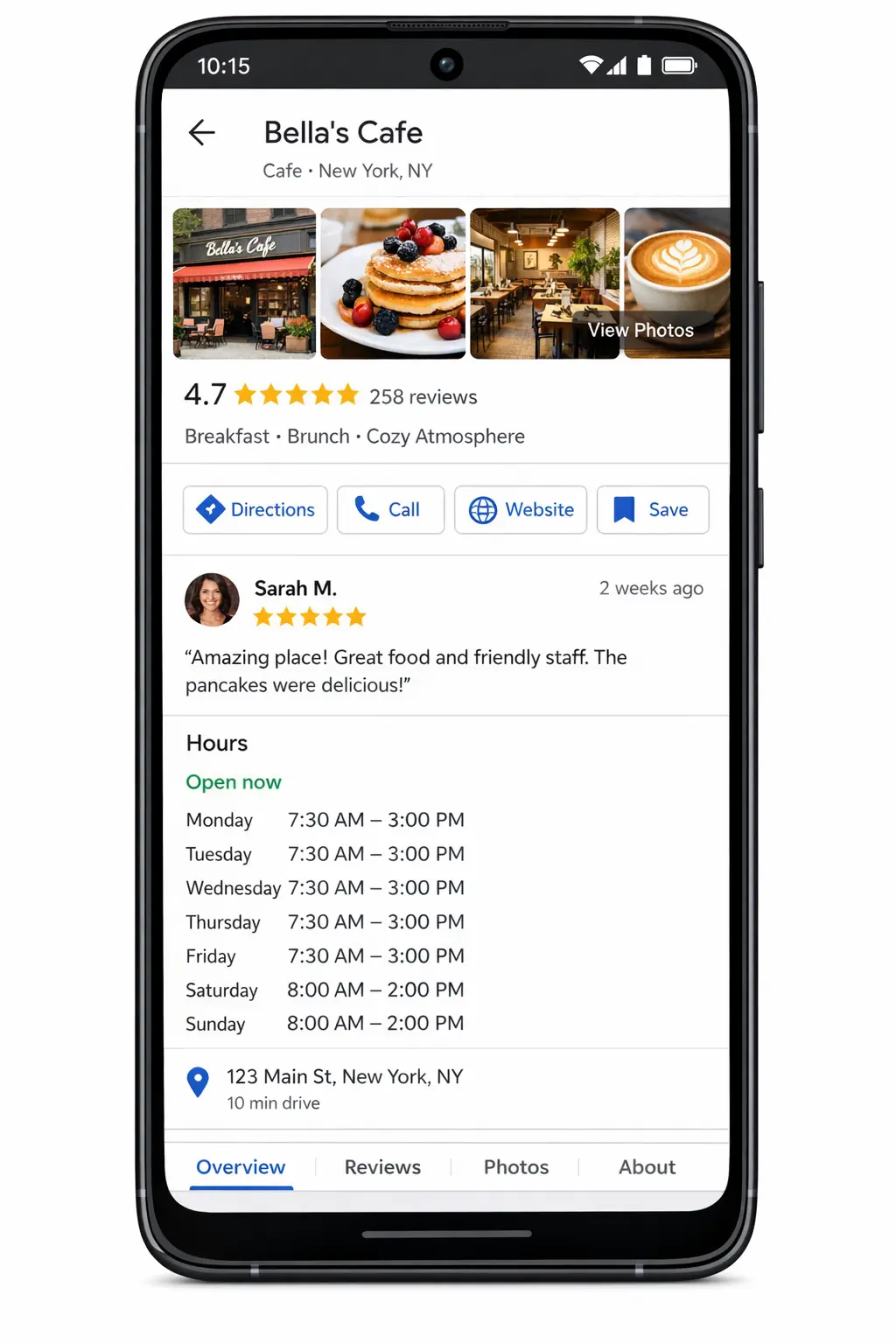
Local SEO is where most SMEs should focus first, especially service-based businesses. Claim and fully optimize your Google Business Profile, build consistent local citations, actively manage reviews, and create location-specific content. Our local SEO services have helped businesses increase their local visibility by 200% or more within six months.
On-page optimization means every important page has a unique, keyword-rich title tag and meta description, uses header tags to structure content logically, includes relevant internal links, and provides comprehensive coverage of its topic. These basics are simple but often overlooked.
Google Ads: Immediate Visibility When You Need It
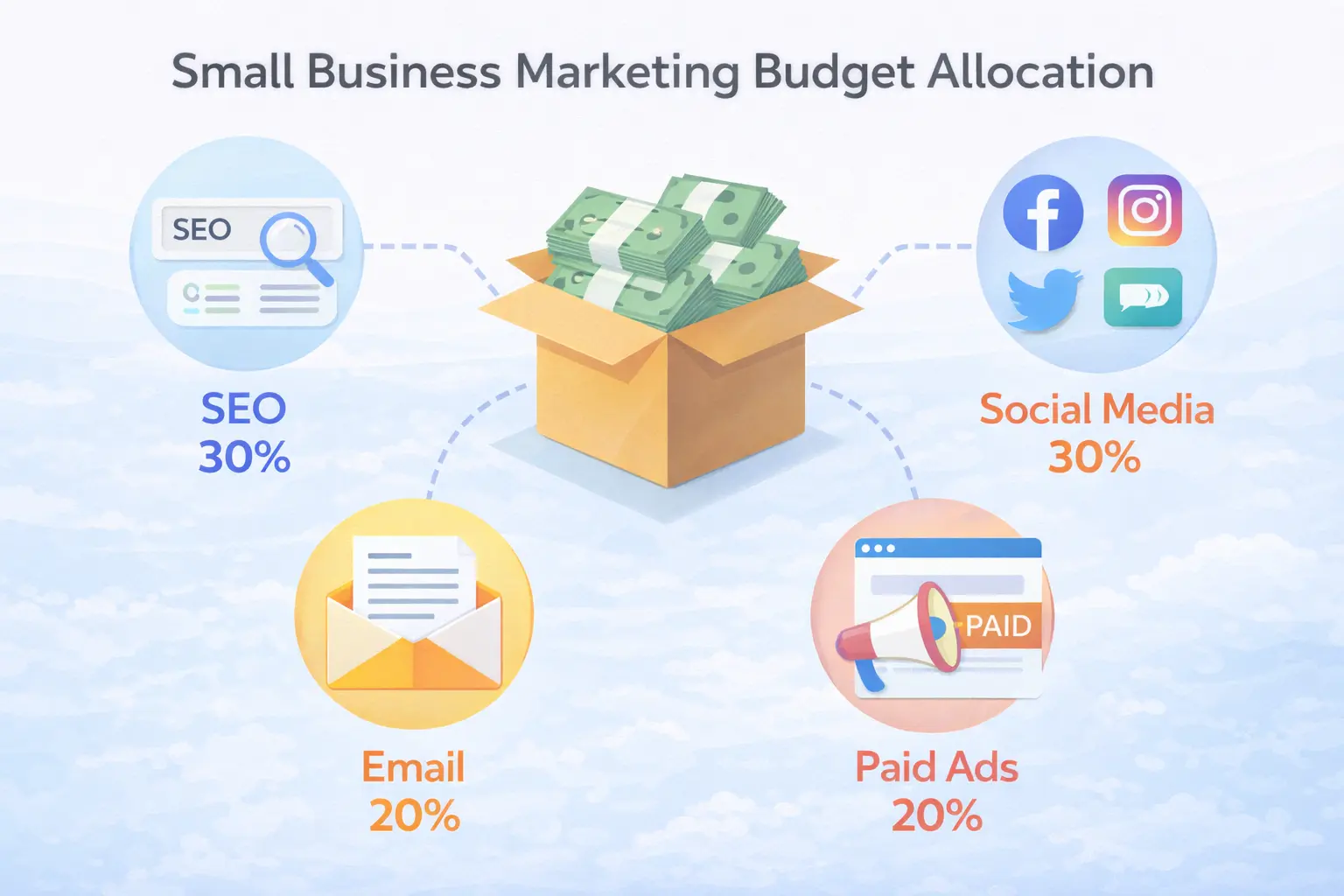
Recommended SME Marketing Budget Allocation
Google Ads provides what SEO cannot: immediate visibility for high-intent searches. For SMEs, the key is running highly targeted campaigns with tight budget controls rather than trying to compete on broad, expensive keywords.
Start with branded and high-intent keywords. If someone searches for your business name, you want to be there. If someone searches for "[your service] near me" or "[your service] cost," those are high-intent queries that justify paid placement.
Use negative keywords aggressively. The biggest waste of SME ad budget is paying for irrelevant clicks. Build comprehensive negative keyword lists to exclude searches that indicate wrong intent, competitors, or unrelated topics.
Leverage Smart Bidding but with guardrails. Google's AI-powered bidding strategies like Target CPA and Target ROAS have become genuinely effective in 2026, but they need sufficient conversion data to optimize well. Start with manual bidding until you have at least 30-50 conversions per month, then switch to automated strategies.
Landing pages matter more than ads. You can write the perfect ad, but if it sends users to a generic homepage, you will waste most of your budget. Create dedicated landing pages for each campaign with messaging that matches the ad, a clear value proposition, and a single focused call to action.
Social Media Marketing: Building Community, Not Just Followers
Social media marketing in 2026 is less about broadcasting to large audiences and more about building engaged communities around your brand.
Choose your platforms strategically. You do not need to be everywhere. If your audience is B2B professionals, invest heavily in LinkedIn and ignore TikTok. If you sell visual products to younger consumers, Instagram and TikTok are your priorities. Go deep on 2-3 platforms rather than spreading thin across six.
Short-form video is essential. Across every platform, video content (particularly under 60 seconds) generates dramatically higher engagement than static posts. The production quality bar is actually lower than you might think. Authentic, well-lit smartphone videos often outperform polished corporate productions because they feel genuine.
Community engagement means actively participating in conversations, not just posting content. Respond to every comment. Ask questions. Share user-generated content. Join and contribute to relevant groups and discussions. The algorithm rewards accounts that generate genuine conversation.
Social Media Advertising: Precision Targeting
Social media ads offer targeting capabilities that are especially valuable for SMEs because they allow you to reach very specific audiences without wasting budget on broad exposure.
Start with retargeting. The highest-ROI social ads target people who have already visited your website or engaged with your content. These warm audiences convert at dramatically higher rates than cold audiences, which means your limited budget goes further.
Lookalike audiences built from your existing customers allow you to find new prospects who share characteristics with your best buyers. Upload your customer email list and let the platform's algorithms find similar users.
Creative testing is critical. Run multiple ad variations simultaneously and let performance data guide your creative direction. Test different headlines, images, videos, and calls to action. The insights you gain from testing will improve not just your ads but your overall marketing messaging.
Email Marketing: The Channel You Own
| Email Marketing Metric | Good | Excellent |
|---|---|---|
| Open Rate | 20-25% | 30%+ |
| Click-Through Rate | 2-3% | 5%+ |
| Conversion Rate | 1-2% | 3%+ |
| Unsubscribe Rate | < 0.5% | < 0.2% |
| List Growth Rate | 2-3%/mo | 5%+/mo |
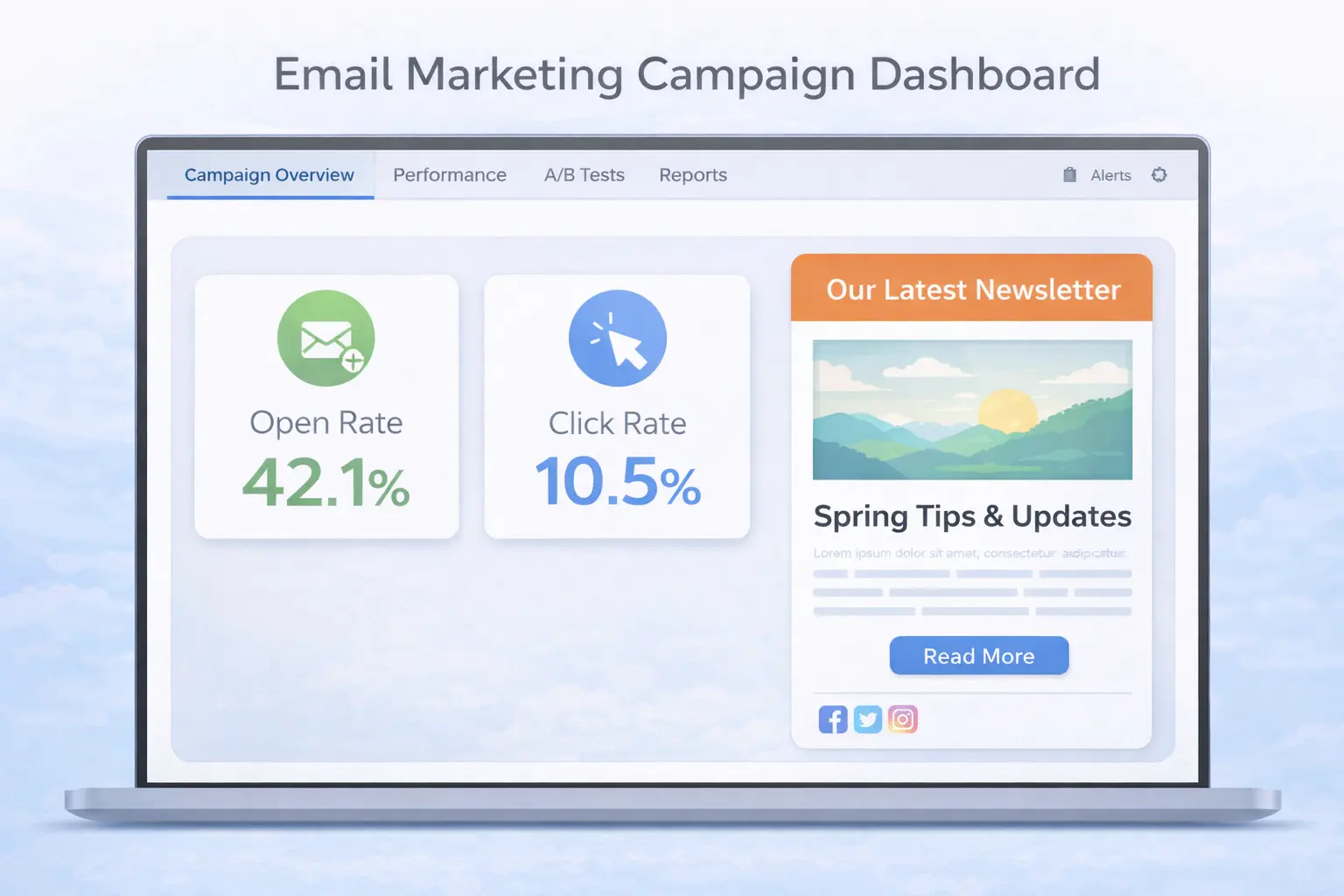
Email marketing remains the highest-ROI digital marketing channel, returning an average of $36 for every $1 spent according to Litmus research. Unlike social media, you own your email list, meaning no algorithm change can take away your ability to reach your audience.
Build your list from day one. Offer genuine value in exchange for email addresses: exclusive content, useful tools, discounts, or early access. Place sign-up opportunities throughout your website, particularly on your highest-traffic pages.
Segment your audience. Sending the same email to your entire list is a wasted opportunity. Segment by purchase history, engagement level, interests, and stage in the buying journey. Personalized, segmented campaigns generate dramatically higher open rates, click rates, and conversions.
Automate your core sequences. Set up automated email flows for welcome sequences, abandoned cart recovery, post-purchase follow-ups, and re-engagement campaigns. These automated flows run continuously, generating revenue while you sleep. Modern email platforms have made automation accessible to businesses of any size.
Focus on value, not volume. Send emails when you have something genuinely valuable to share, not just because it is been a week. Every email should either educate, entertain, or offer something useful. Respect your subscribers' inboxes and they will reward you with loyalty and purchases.
First-Party Data Strategy: The Privacy-First Imperative
With third-party cookies fully deprecated and privacy regulations tightening globally, first-party data has become the most valuable asset in digital marketing. SMEs that build direct relationships with their audience own data that competitors cannot buy.
Collect data through value exchange. Interactive quizzes, assessments, calculators, and personalized recommendations all collect valuable first-party data while providing genuine utility to users. A home renovation company might offer a "project cost estimator" that collects budget, timeline, and preference data, creating both a useful tool and a qualified lead.
CRM integration ensures that every customer touchpoint contributes to a unified profile. Connect your website analytics, email platform, social media, and customer service tools so that you have a complete picture of each customer's journey.
Use your data for personalization. Even basic personalization, like addressing customers by name, recommending products based on purchase history, or adjusting messaging based on engagement patterns, significantly improves marketing performance.
Measuring What Matters
Average ROI by Marketing Channel for SMEs
SMEs often track too many metrics or the wrong ones. Focus on the numbers that directly connect to business outcomes.
Customer Acquisition Cost (CAC) tells you how much you spend to acquire each new customer. Track this by channel so you know where your marketing budget works hardest.
Customer Lifetime Value (LTV) tells you how much a customer is worth over their entire relationship with your business. When LTV significantly exceeds CAC, you have a scalable growth engine.
Return on Ad Spend (ROAS) measures the revenue generated per dollar of advertising spend. This should be tracked at the campaign level to identify your most and least efficient campaigns.
Organic traffic growth measures the long-term compounding value of your content and SEO investments. Track month-over-month trends rather than absolute numbers.
Our analytics and reporting services can help you set up proper tracking and create dashboards that surface the metrics that actually drive business decisions.
Building Your Marketing Plan
| Phase | Focus Areas | Key Actions | Budget % |
|---|---|---|---|
| Month 1-3 | Foundation | Website, SEO basics, analytics | 30% |
| Month 3-6 | Content & SEO | Blog, local SEO, email list | 25% |
| Month 6-12 | Scale | Paid ads, social media, automation | 30% |
| Month 12+ | Optimize | Data-driven refinement, expansion | 15% |
The biggest mistake SMEs make is trying to do everything at once. Here is a prioritized approach:
Month 1-3: Get your technical foundation right. Ensure your website is fast, mobile-friendly, and conversion-optimized. Set up Google Business Profile, Google Analytics 4, and Google Search Console. Begin building your email list.
Month 3-6: Start content marketing and basic SEO. Publish consistently, optimize your most important pages, and build your first content hub. Launch retargeting ads on your highest-value social platform.
Month 6-12: Scale what works. Expand your content strategy, introduce Google Ads for high-intent keywords, build out email automation sequences, and invest in social media community building.
Month 12+: Optimize and compound. Refine your strategies based on data, expand into new channels gradually, and invest more heavily in what is generating the best ROI.
If you need help building or executing a digital marketing strategy tailored to your business and budget, contact our team for a free consultation. We specialize in helping SMEs achieve outsized results through smart, data-driven marketing.