

Most businesses approach social media backwards. They obsess over follower counts, chase viral moments, and measure success by likes and comments. Meanwhile, their social media effort generates zero measurable business impact. In 2026, the brands winning on social media are those that treat it as a strategic business channel, not a vanity metric.
This guide covers how to build a social media marketing strategy that generates real engagement, builds genuine community, and most importantly, converts audience attention into business results.
The Social Media Landscape in 2026
| Platform | Monthly Active Users | Best For | Top Content Format |
|---|---|---|---|
| 2B+ | Visual brands, lifestyle | Reels, Stories | |
| TikTok | 1.8B+ | Discovery, Gen Z/Millennial | Short-form video |
| 1B+ | B2B, professional services | Articles, carousels | |
| YouTube | 2.5B+ | Education, entertainment | Long & short video |
| 3B+ | Local business, 35+ demo | Groups, Marketplace |
The platform landscape has stabilized somewhat after years of rapid change, but each platform has carved out a distinct identity and audience.
Instagram remains the dominant platform for visual brands, with over 2 billion monthly active users. Its strength lies in the combination of feed posts for polished brand content, Stories for daily engagement, Reels for discovery and reach, and Shopping for direct commerce. The algorithm heavily favors Reels and carousel posts, making these formats essential for organic reach.
TikTok is the discovery engine of social media. Its algorithm is unmatched at surfacing content from unknown creators to massive audiences, making it the best platform for reaching new potential customers. Short-form video (15-60 seconds) is the native format. TikTok Shop has also made it a serious commerce platform.
LinkedIn has become the clear leader for B2B marketing, professional services, and thought leadership. The platform has evolved well beyond job postings to become a genuine content platform where long-form posts, articles, and even video content can reach highly targeted professional audiences.
YouTube remains the world's second-largest search engine and the premier platform for long-form video content. YouTube Shorts competes directly with TikTok and Reels for short-form attention, but the platform's real value lies in searchable, evergreen video content that generates views for years.
Facebook maintains the largest user base globally and remains highly effective for local businesses, community groups, and paid advertising. Its organic reach has declined substantially, but Facebook Groups and targeted social media advertising remain powerful tools.
Defining a Strategy That Drives Business Results
A strategy starts with clear objectives tied to business outcomes. "Grow our social media" is not a strategy. "Generate 50 qualified leads per month from LinkedIn" is.
Set specific, measurable goals for each platform you invest in. These might include website traffic from social, email list sign-ups, direct messages from potential customers, product sales through social shops, or brand awareness metrics like share of voice.
Choose 2-3 platforms maximum and commit to doing them exceptionally well rather than maintaining a mediocre presence across six platforms. Your platform choices should be determined entirely by where your target audience spends time, not by which platforms are trending.
Define your content pillars. Every successful social media strategy is built around 3-5 recurring content themes. A web development agency might use: case study showcases, behind-the-scenes process content, educational tips, team culture, and client testimonials. These pillars ensure variety while maintaining focus.
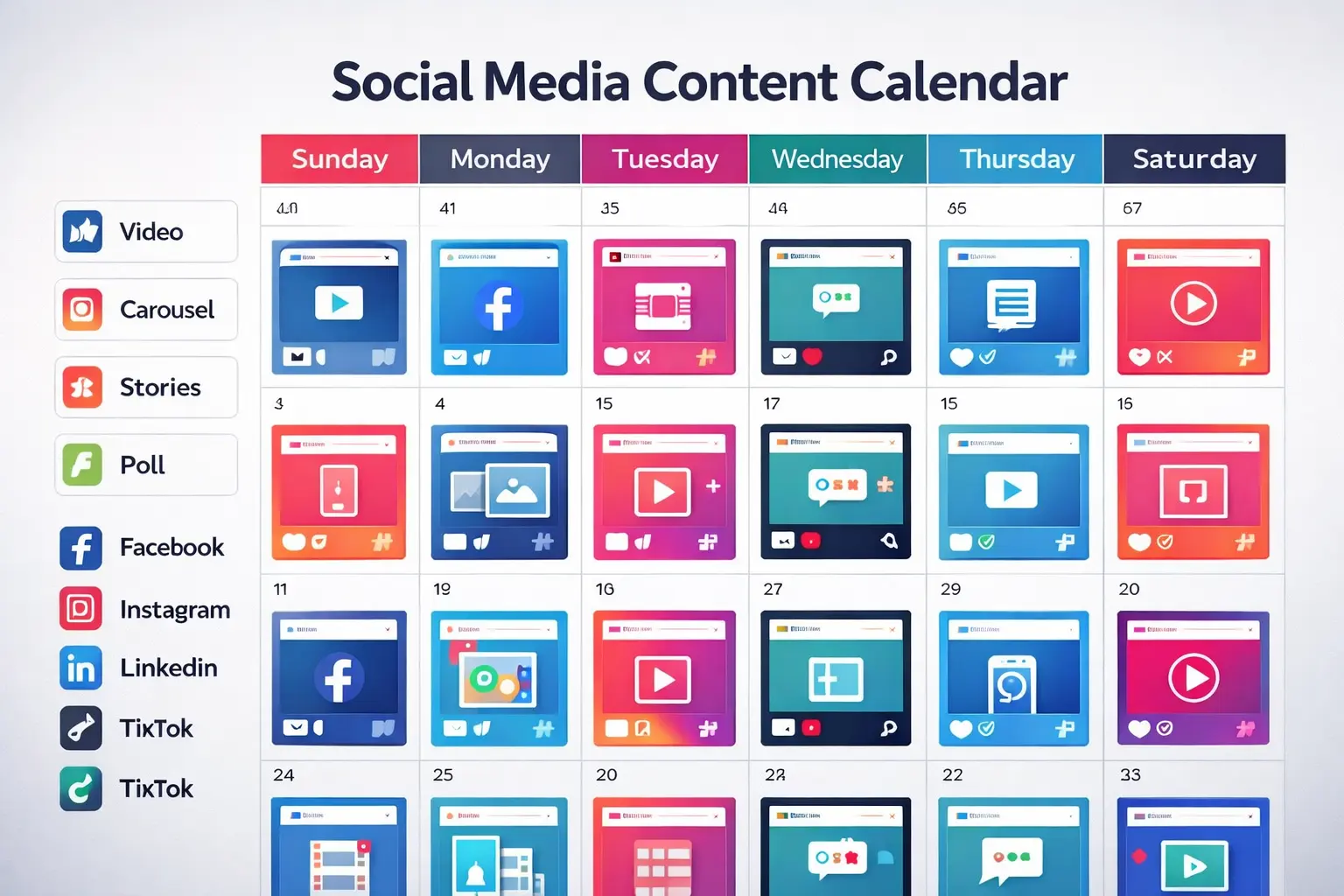
Create a content calendar that balances planned content with room for timely, reactive posts. Batch-produce content weekly or bi-weekly, schedule it using tools like Buffer or Later, and maintain consistent posting frequency. For most businesses, posting 4-5 times per week on primary platforms is the sweet spot between visibility and sustainability.
Short-Form Video: The Non-Negotiable Format
Engagement Rate by Content Format (2026)
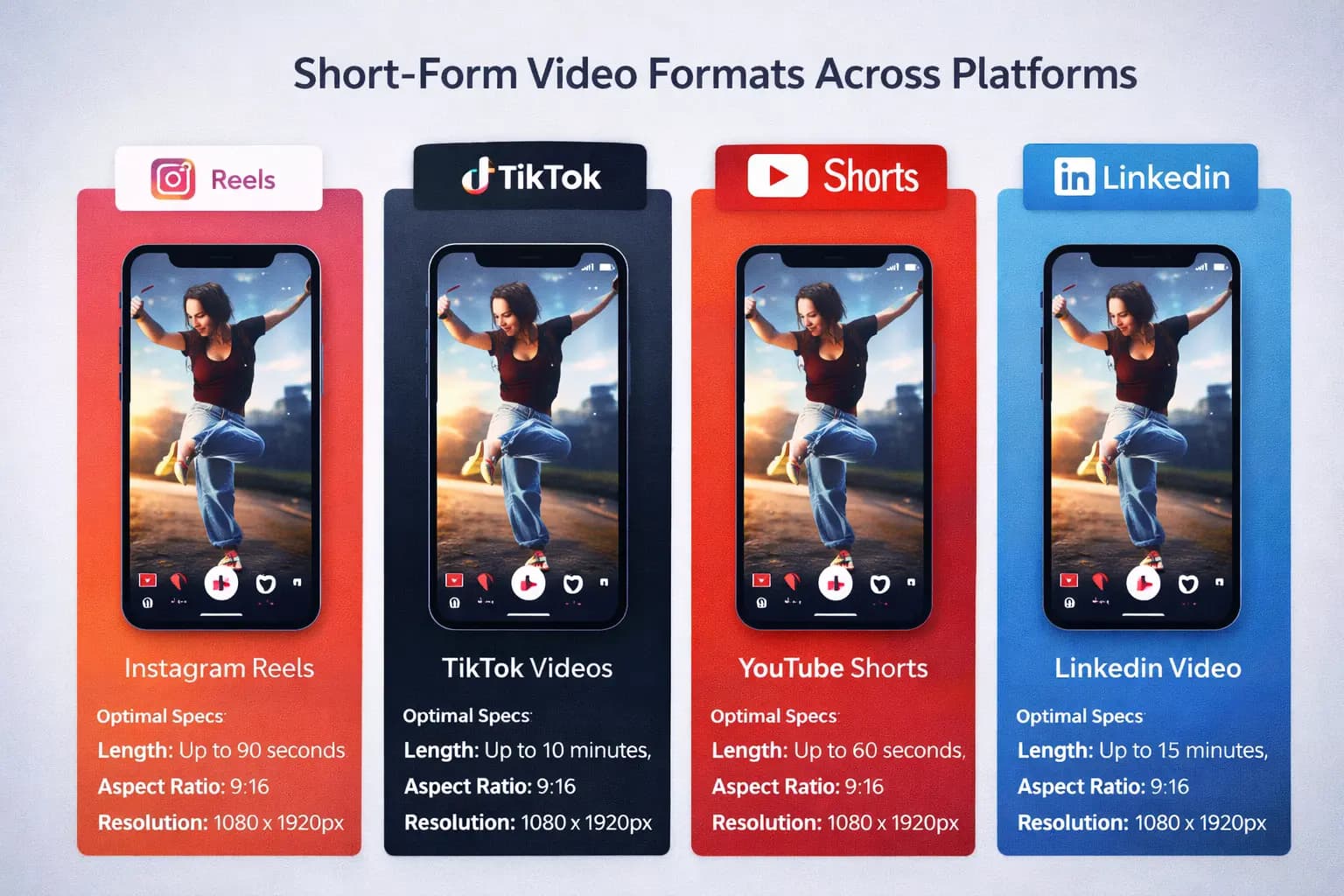
Regardless of your industry, short-form video is now the highest-performing content format across every major platform. Reels, TikToks, and YouTube Shorts generate dramatically more reach and engagement than static images or text posts.
The production quality bar is lower than most businesses assume. Smartphone-shot, naturally lit, authentic videos consistently outperform overproduced corporate content. What matters is the first 3 seconds (which must stop the scroll), a clear and valuable message, and a sense of genuine personality.
Content types that work across industries include: how-to tutorials, before-and-after transformations, myth-busting, day-in-the-life content, quick tips, customer testimonials, product demonstrations, and behind-the-scenes glimpses. The common thread is providing either education, entertainment, or inspiration in a format that respects the viewer's time.
Batch-film content to maximize efficiency. Set aside a few hours each week to film multiple videos at once. With proper planning, a single filming session can produce 10-15 short-form videos, creating weeks of content inventory.
Repurpose across platforms but adapt to each format. A 60-second Reel can be recut as a TikTok, a YouTube Short, a LinkedIn video, and a Facebook Reel. Adjust captions, aspect ratios, and hooks for each platform's conventions, but the core content can remain the same.
Building Community, Not Just Audience
The most valuable social media asset is not a large following but an engaged community that actively participates in conversations around your brand. Communities drive word-of-mouth referrals, provide product feedback, create user-generated content, and demonstrate social proof to prospective customers.
Respond to every comment and DM. This seems obvious, but most businesses fail to do it consistently. Every comment is a conversation opportunity. Every DM is a potential lead. The algorithm also rewards accounts that generate genuine conversations, so engaging with your audience directly increases your organic reach.
Ask questions and create conversation starters. Polls, "this or that" choices, hot takes, and open-ended questions all invite audience participation. When people comment, respond thoughtfully and keep the conversation going. The goal is to make your social presence feel like a community space, not a broadcast channel.
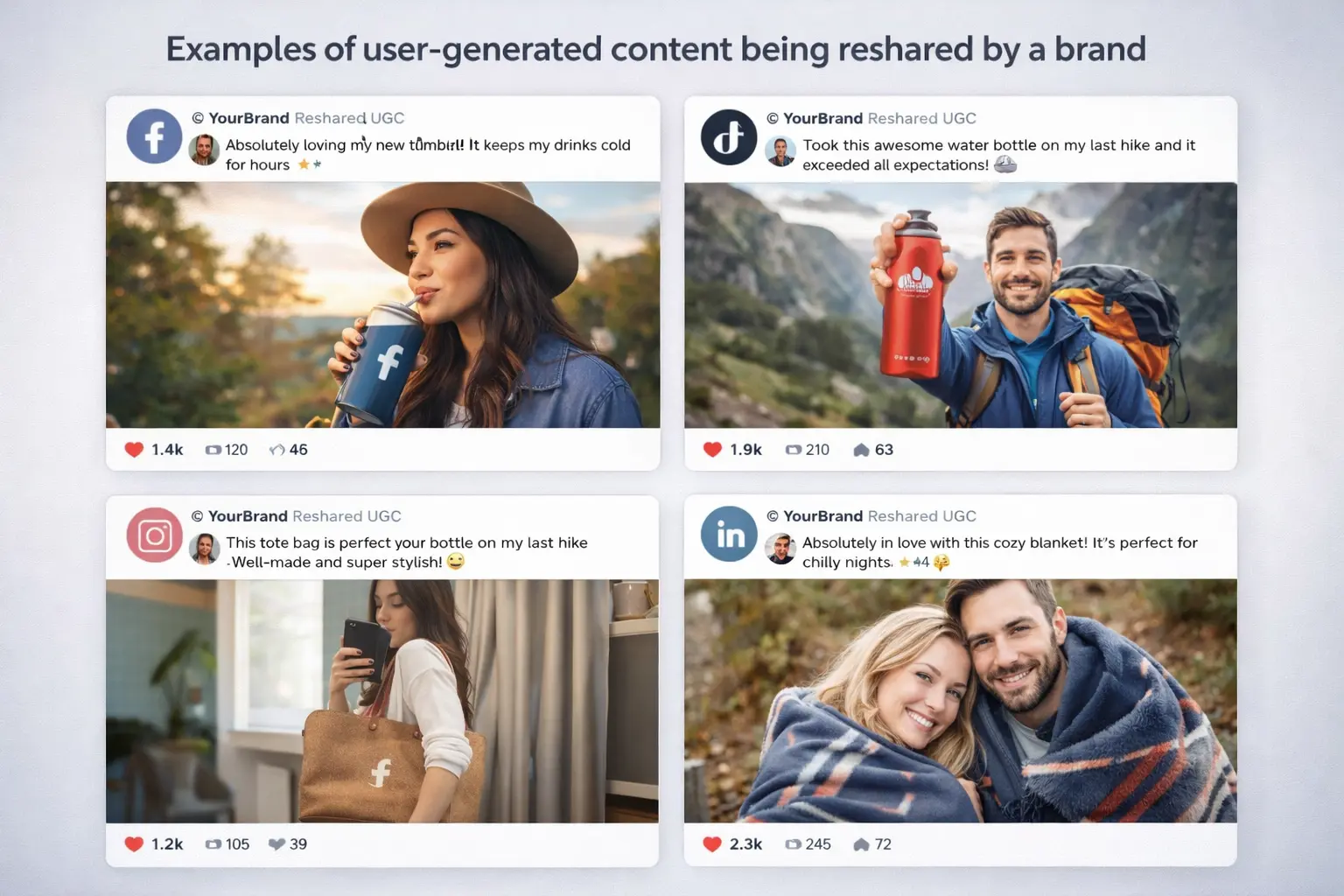
Feature your community. Share user-generated content, spotlight customers, and celebrate community milestones. When people feel seen and valued, they become active advocates who promote your brand to their own networks.
Create exclusive value for your community. This might be early access to new products, behind-the-scenes content, exclusive live sessions, or community-only discounts. Give people a reason to not just follow you but to actively engage.
Influencer Marketing: Micro Over Macro
Influencer marketing has matured considerably. In 2026, the most effective approach for most businesses is micro-influencer partnerships (creators with 5,000-50,000 followers) rather than expensive celebrity or macro-influencer campaigns.
Micro-influencers deliver better ROI because their audiences are more niche, more engaged, and more trusting. A fitness micro-influencer with 20,000 highly engaged followers will typically drive more conversions for a fitness product than a lifestyle celebrity with 2 million passive followers.
Prioritize authenticity over reach. The most effective partnerships are those where the influencer genuinely uses and believes in your product. Audiences can detect inauthenticity instantly, and forced endorsements damage both your brand and the influencer's credibility.
Long-term partnerships outperform one-off posts. A creator who mentions your product consistently over months builds genuine association and trust. Negotiate ongoing relationships rather than single-post deals.
Track performance rigorously. Use unique discount codes, UTM-tagged links, and post-campaign surveys to measure the actual business impact of each partnership. Vanity metrics like impressions and likes are not sufficient; track clicks, sign-ups, and purchases.
Social Commerce: Closing the Loop
Social commerce, selling directly through social platforms, has become a significant revenue channel. Instagram Shop, TikTok Shop, and Facebook Marketplace collectively process billions in transactions.
Set up shop features on every platform that supports them. Tag products in your posts, Stories, and Reels. Create shoppable collections and lookbooks. The easier you make it for users to purchase without leaving the platform, the higher your conversion rates will be.
Live shopping events combine entertainment, education, and commerce in a format that generates strong conversion rates. Host regular live sessions where you demonstrate products, answer questions in real time, and offer live-exclusive deals.
Integrate with your main store. Ensure your social commerce channels sync with your e-commerce platform for inventory management, order fulfillment, and customer data. Disconnected systems create fulfillment nightmares and poor customer experiences.
Paid Social: Amplifying What Works
| Ad Objective | Best Platform | Avg. CPC | Avg. ROAS |
|---|---|---|---|
| Brand Awareness | TikTok, Instagram | $0.50-1.50 | N/A |
| Lead Generation | LinkedIn, Facebook | $2-8 | 3-5x |
| E-commerce Sales | Instagram, TikTok | $0.80-2.00 | 4-8x |
| App Installs | TikTok, Snapchat | $1-3 | 2-4x |
| Retargeting | Facebook, Instagram | $0.30-1.00 | 8-15x |
Social media advertising should amplify your best organic content rather than replace organic efforts. The most effective paid social strategies start with identifying top-performing organic content and putting ad budget behind it.
Retargeting remains the highest-ROI paid social tactic. Show ads to people who have visited your website, engaged with your content, or abandoned a cart. These warm audiences convert at 3-5x the rate of cold audiences.
Lookalike audiences allow you to find new prospects who resemble your existing customers. Upload your customer list and let the platform's AI find similar users. Start with 1% lookalike audiences for the most similar matches, then gradually expand.
Creative testing is where campaigns are won or lost. Test multiple ad creatives, including video, carousel, and static formats, with different hooks, visuals, and calls to action. Let performance data guide your creative direction rather than assumptions.
Budget allocation should follow the 70/20/10 rule: 70% on proven performers, 20% on promising experiments, and 10% on completely new approaches. This ensures consistent performance while maintaining innovation.
Measuring Social Media ROI
Social Media Time Investment vs Return

The most important metrics are those that connect social media activity to business outcomes.
Traffic and conversions from social channels, tracked through UTM parameters in Google Analytics, tell you how much business your social presence generates. Set up goal tracking for leads, sign-ups, and purchases attributed to social sources.
Engagement rate (engagements divided by reach) measures how compelling your content is to those who see it. A high engagement rate indicates strong content-audience fit and predicts sustainable organic growth.
Response rate and time measure your community management effectiveness. Faster, more consistent responses correlate with higher customer satisfaction and increased conversion rates from social channels.
Share of voice measures your brand's visibility relative to competitors. Track how often your brand is mentioned compared to competitors in social conversations within your industry.
Building an effective social media strategy requires consistent effort and strategic thinking, but the rewards are substantial. If you need help developing a strategy or managing your social presence, reach out to our team for a free consultation. Our social media marketing services are designed to build the kind of engaged, converting audience that drives real business growth.