


The search landscape in 2026 bears little resemblance to what it was just a few years ago. AI Overviews now appear in over 40% of Google queries, zero-click searches account for nearly two-thirds of all search activity, and the line between traditional SEO and AI optimization has blurred beyond recognition. Yet organic search remains the single most valuable traffic source for businesses worldwide, driving higher intent and better conversion rates than any paid channel.
This guide covers every aspect of modern search engine optimization as it stands today, from the technical foundations to the AI-first strategies that separate top-performing sites from everyone else. Whether you are refining an existing strategy or building one from scratch, you will find actionable tactics backed by what is actually working right now.
The 2026 Search Landscape: What Has Changed
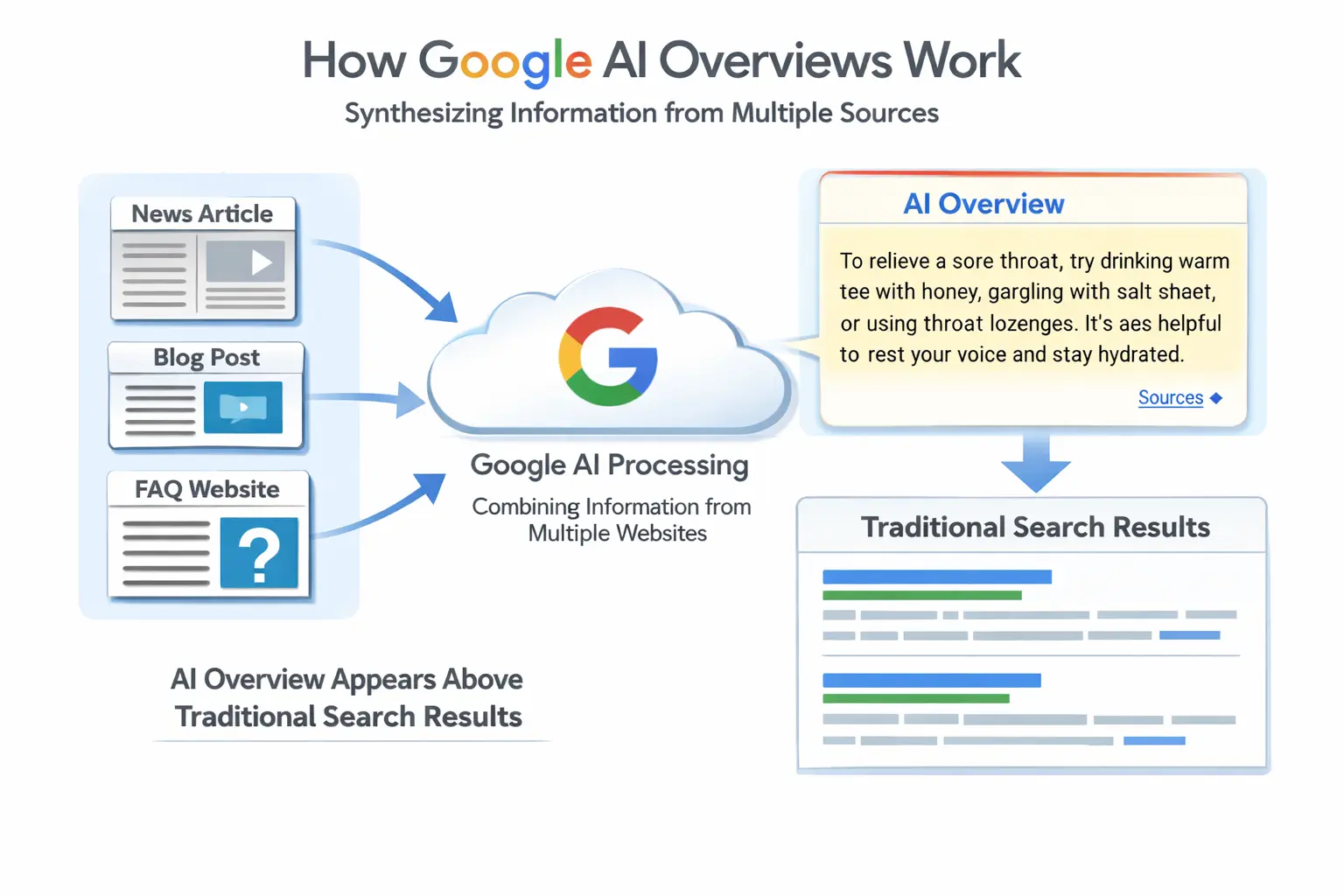
Google now processes over 12 billion searches per day, but fewer than ever result in a traditional click to a website. AI Overviews have reshaped the results page, synthesizing answers from multiple sources and presenting them directly to users. Meanwhile, alternative search platforms like SearchGPT, Perplexity, and Arc Search have captured meaningful market share, particularly among younger demographics.
What this means for SEO professionals is a fundamental shift in strategy. Ranking number one still matters, but being the source that AI systems cite matters even more. Google's AI Overviews pull from pages that demonstrate clear expertise, structured information, and factual accuracy. The sites that win are those optimized not just for traditional crawlers but for large language models that interpret and synthesize their content.
The other major shift is search intent fragmentation. Users no longer rely on a single search engine. They might ask ChatGPT for a recommendation, verify it on Google, check reviews on Reddit, and watch a YouTube comparison before making a decision. Your SEO strategy must account for visibility across this entire ecosystem.
E-E-A-T in 2026: Experience Is Everything
Google's E-E-A-T framework (Experience, Expertise, Authoritativeness, Trustworthiness) has become the single most important ranking paradigm. In a world flooded with AI-generated content, the sites that rank are those that demonstrate genuine human experience and verifiable expertise.
Experience is now the dominant signal. Google's algorithms have become remarkably effective at distinguishing between content written by someone who has actually done the thing versus content that merely describes it. This means first-hand case studies, original photography, proprietary data, and authentic perspectives carry enormous weight. If you sell a product, show real customer results. If you offer a service, demonstrate your actual process with case studies from real projects.
Expertise requires depth that AI cannot easily replicate. Surface-level articles that cover a topic in 500 words are virtually invisible in 2026 search results. Google rewards comprehensive content that answers not just the primary query but the follow-up questions a reader would naturally have. This is why long-form, well-structured content consistently outperforms shorter alternatives.
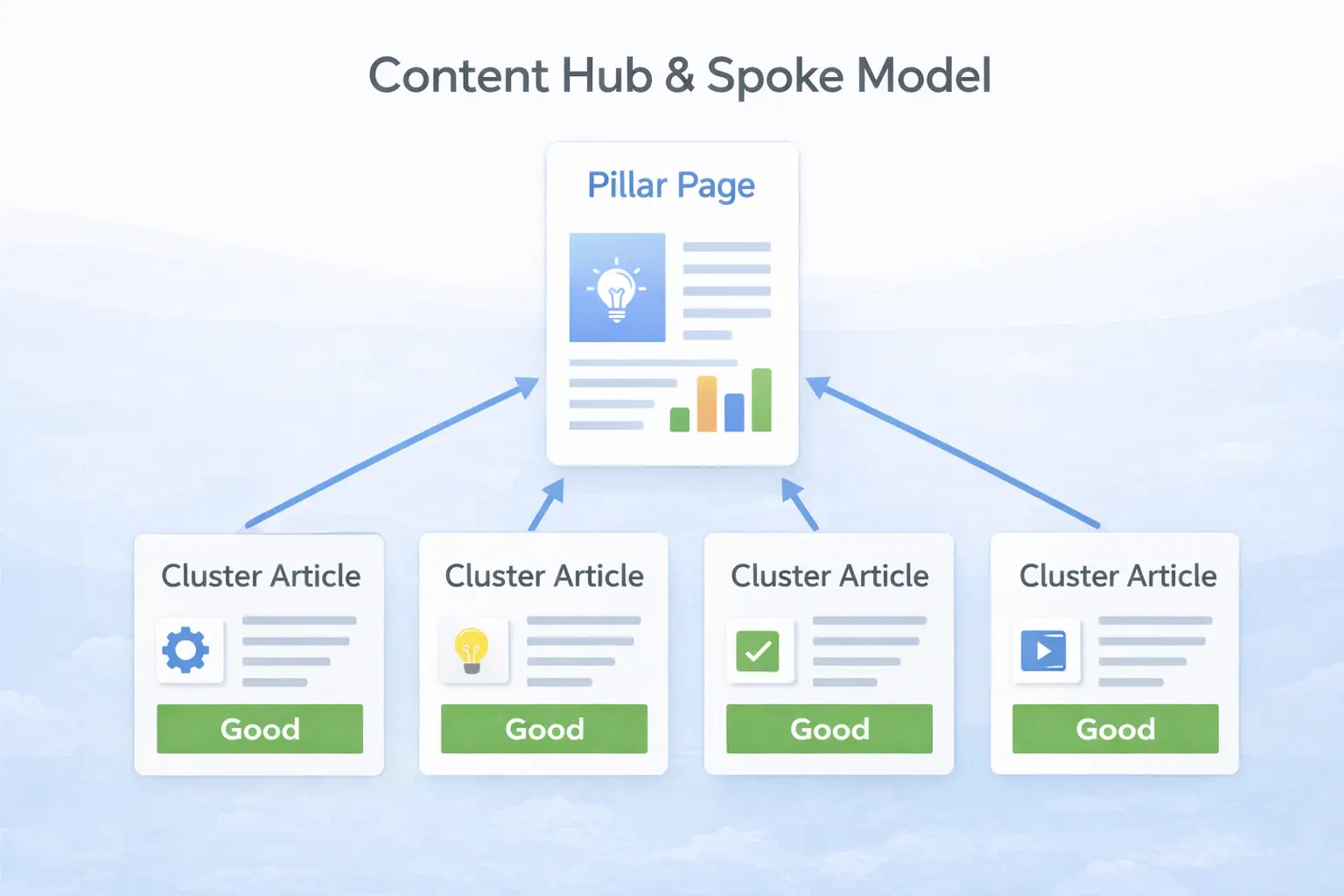
Authoritativeness is built through consistent topical coverage and quality backlinks. Sites that publish extensively on a focused topic cluster earn what Google calls topical authority, making every new page on that topic more likely to rank quickly. This is why we recommend that businesses maintain a focused content writing strategy rather than publishing broadly on unrelated topics.
Trustworthiness encompasses technical security, editorial accuracy, and transparent business practices. HTTPS is table stakes. Accurate citations, clear author attribution, visible contact information, and a solid about us page all contribute to trust signals that algorithms evaluate.
Core Web Vitals: The 2026 Technical Baseline
| Metric | Target | Impact on Rankings |
|---|---|---|
| Largest Contentful Paint (LCP) | < 2.5s | High |
| Interaction to Next Paint (INP) | < 200ms | High |
| Cumulative Layout Shift (CLS) | < 0.1 | Medium |
| Time to First Byte (TTFB) | < 800ms | Medium |
| First Contentful Paint (FCP) | < 1.8s | Low-Medium |
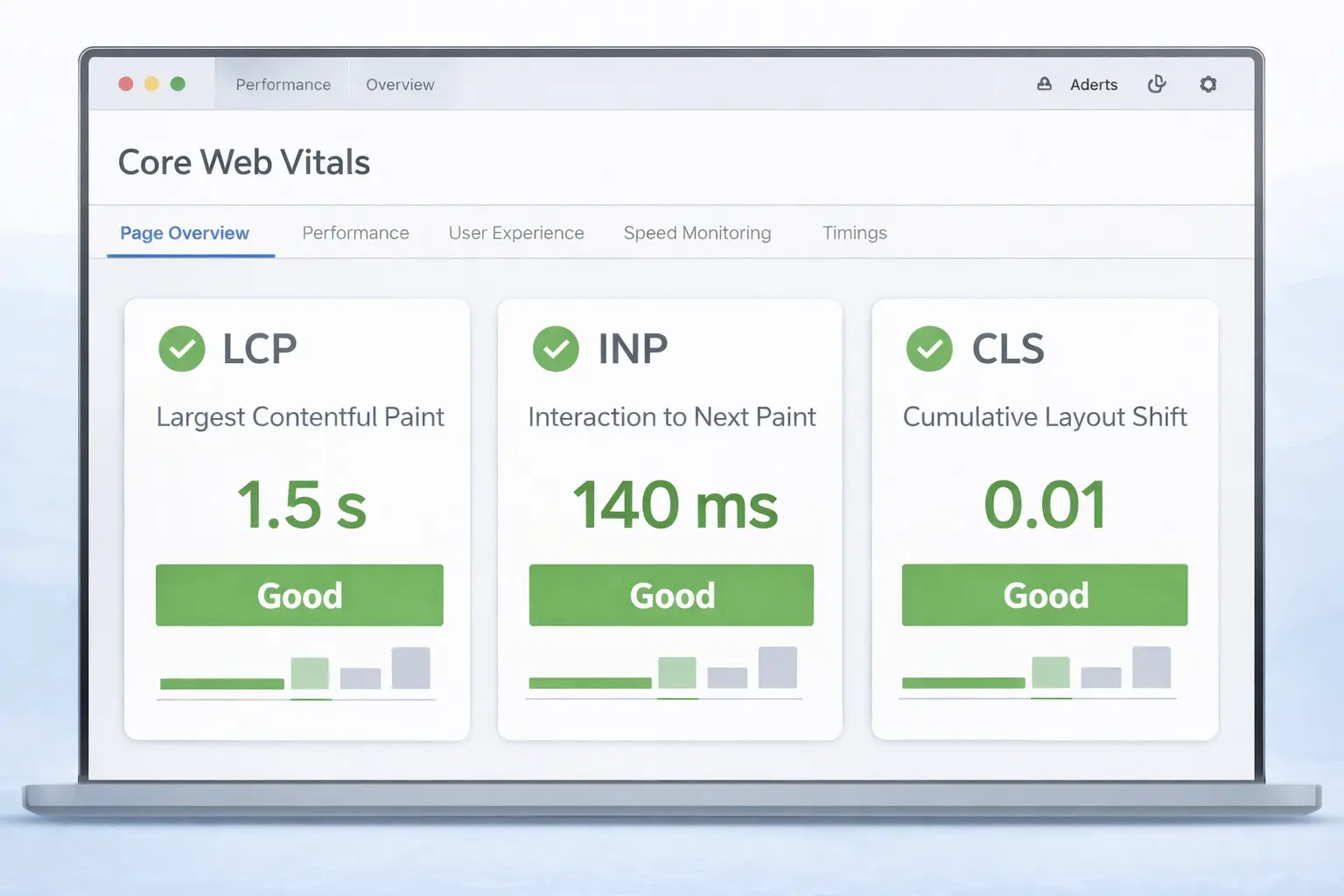
Core Web Vitals remain a confirmed ranking factor, but the metrics have evolved. The most significant change was the replacement of First Input Delay (FID) with Interaction to Next Paint (INP) as the responsiveness metric. This shift reflects Google's focus on measuring the full user interaction experience, not just the first click.
Largest Contentful Paint (LCP) should be under 2.5 seconds. In 2026, the biggest gains come from image optimization using AVIF and WebP formats, aggressive resource prioritization with fetchpriority attributes, and edge-side rendering. If your site is built on a modern framework, server-side rendering or static generation should handle most LCP concerns. For businesses needing performance-optimized sites, our custom website development team builds with Core Web Vitals as a foundational requirement.
Interaction to Next Paint (INP) should be under 200 milliseconds. This metric measures the worst-case responsiveness of every interaction on your page, not just the first one. Optimizing INP requires minimizing main thread work, breaking up long JavaScript tasks with scheduler.yield(), and being ruthless about third-party scripts. Every analytics tag, chat widget, and advertising pixel adds latency.
Cumulative Layout Shift (CLS) should remain below 0.1. The most common offenders are still images without dimensions, dynamically injected content, and web fonts that cause text reflow. Using the CSS size-adjust descriptor for font fallbacks and the content-visibility property for off-screen content can eliminate most layout shift issues.
You can monitor your Core Web Vitals through Google Search Console and the Chrome User Experience Report. Our technical SEO audits include a comprehensive Core Web Vitals analysis with prioritized recommendations.
On-Page SEO: Writing for Humans and AI Simultaneously
The fundamentals of on-page SEO have not changed in principle, but the execution has evolved significantly. Your content must satisfy both human readers seeking valuable information and AI systems trying to understand and cite your pages.
Title tags remain critically important but now serve a dual purpose. They must be compelling enough to earn clicks in traditional results while being descriptive enough for AI systems to understand what your page covers. Keep them under 60 characters, lead with your primary keyword, and make them genuinely interesting. A title like "SEO Guide 2026" loses to "How We Increased Organic Traffic 340% in 6 Months" every time.
Header structure has become more important than ever because AI systems use your H2 and H3 hierarchy to understand content organization. Each H2 should represent a distinct subtopic that could stand alone as an answer to a specific query. This increases the chances of your content being featured in AI Overviews and featured snippets.
Semantic content optimization means writing comprehensively about your topic using the natural vocabulary of the subject area. Rather than targeting a single keyword, cover the full semantic field. If your page is about SEO, it should naturally include terms like search rankings, organic traffic, keyword research, backlinks, and content optimization. Tools like Google's Natural Language API can help you analyze how well your content covers a topic.
Internal linking remains one of the most underutilized SEO tactics. Every page on your site should link to other relevant pages using descriptive anchor text. This distributes authority, helps search engines discover content, and creates a better user experience. Link your blog posts to relevant service pages and vice versa to establish clear topical connections.
Technical SEO: The Infrastructure That Makes Everything Work
No amount of great content will rank if your technical foundation is broken. Technical SEO in 2026 encompasses site architecture, crawlability, rendering, and structured data.
Site architecture should follow a logical hierarchy where every important page is reachable within three clicks from the homepage. Use clean, descriptive URLs that include relevant keywords. Implement breadcrumb navigation and make sure your internal linking creates clear pathways between related content. For complex sites, a well-structured CMS makes maintaining this architecture dramatically easier.
Crawl budget optimization matters more as sites grow. Use your robots.txt file strategically to prevent crawling of low-value pages like filtered search results, paginated archives, and parameter-heavy URLs. Keep your XML sitemap updated with only your canonical, indexable pages. Monitor crawl stats in Google Search Console to identify bottlenecks.
Structured data using Schema.org markup has become essential for visibility in AI-enhanced search results. At minimum, implement Article, Organization, BreadcrumbList, and FAQ schema where appropriate. For e-commerce sites, Product and Review schema can unlock rich results that dramatically improve click-through rates. Structured data helps AI systems understand your content's context and increases the likelihood of being cited in AI Overviews.
Mobile-first indexing means Google exclusively uses the mobile version of your site for ranking. Ensure your mobile experience is not just responsive but genuinely excellent. Touch targets should be at least 48 pixels, text should be readable without zooming, and interactive elements should not overlap. Test regularly with Google's mobile-friendly tools.
Link Building: Earning Authority in 2026
Backlinks remain a top-three ranking factor, but the bar for what constitutes a valuable link has risen substantially. Off-page SEO in 2026 is fundamentally about earning editorial recognition from authoritative sources.
Digital PR has become the gold standard for link building. Creating original research, data studies, and expert commentary that journalists and publishers want to cite earns links that are editorially placed, contextually relevant, and virtually impossible for competitors to replicate. This requires investing in proprietary data collection, expert surveys, or unique analysis that provides genuine news value.
Content-driven link acquisition works when you create resources that are genuinely the best available on a topic. Comprehensive guides, free tools, calculators, and templates naturally attract links because they provide utility that other sites want to reference for their own readers.
Brand mentions and unlinked citations have gained importance as Google increasingly uses brand signals as a ranking factor. Even mentions of your brand without a hyperlink contribute to your perceived authority. Monitoring brand mentions and converting unlinked citations to actual links is a high-ROI activity.
Guest contributions remain viable but must be genuinely valuable. Write for publications your target audience actually reads. Focus on demonstrating expertise rather than optimizing anchor text. The relationship and exposure matter as much as the link itself.
What does not work in 2026: link exchanges, PBNs, mass directory submissions, and low-quality guest posting on irrelevant sites. Google's SpamBrain algorithm has become extraordinarily effective at identifying manipulative link patterns, and the penalties are severe.
Local SEO: Dominating Your Geographic Market

Local SEO has become more competitive and more important simultaneously. With AI Overviews now appearing for local queries and Google Maps integrating more deeply into search results, local businesses must optimize across multiple surfaces.
Google Business Profile remains the cornerstone of local visibility. In 2026, the most successful local businesses treat their GBP as a second website. This means weekly posts with relevant content and offers, comprehensive service and product catalogs, prompt responses to every review and question, and regular photo uploads showing your team, location, and work.
Local content helps you rank for location-specific searches. Create content about local events, community involvement, and area-specific topics that demonstrate your connection to the community you serve. Individual landing pages for each service area you cover can dramatically increase your local visibility.
Review management directly impacts both rankings and conversion rates. Implement a systematic process for requesting reviews from satisfied customers. Respond to every review, positive or negative, with genuine thoughtfulness. The velocity, recency, and sentiment of your reviews are all ranking factors in the local algorithm.
NAP consistency (Name, Address, Phone) across every online mention of your business remains critical. Audit your citations regularly and correct any inconsistencies across directories, social profiles, and industry-specific platforms.
AI and SEO: Optimization Beyond Traditional Search
The most significant shift in SEO strategy for 2026 is the need to optimize for AI-powered search systems alongside traditional algorithms.
AI Overview optimization requires content that is well-structured, factually accurate, and clearly attributed to an authoritative source. AI systems prefer content with clear hierarchical organization, definitive statements backed by evidence, and structured data that confirms the page's topic and authority. Pages that earn AI Overview citations typically have strong E-E-A-T signals and use clear, declarative language rather than hedging.
Large Language Model (LLM) visibility extends beyond Google. Ensure your content is accessible to AI crawlers (do not block common AI user agents unless you have a specific reason), uses clear HTML semantics, and provides unambiguous answers to common questions in your field. Being cited by ChatGPT, Perplexity, or Claude as a source can drive significant referral traffic.
AI-assisted content creation should be used as a tool, not a replacement for human expertise. The most effective approach in 2026 is using AI for research acceleration, outline generation, and first-draft creation, then layering in genuine experience, original data, and expert perspective that no AI can fabricate. Content that is purely AI-generated without human enhancement is increasingly detectable and devalued by search algorithms.
Measuring SEO Success in 2026
SEO Traffic Distribution by Source in 2026
The metrics that matter have evolved alongside the search landscape. Traditional keyword ranking tracking remains relevant but tells an incomplete story. A comprehensive analytics and reporting strategy should track multiple dimensions of search visibility.
Organic traffic remains the primary metric, but segment it by intent type. Informational queries drive awareness, navigational queries indicate brand strength, and transactional queries drive revenue. Each requires different content and different success metrics.
AI citation tracking is a new metric category. Monitor how often your content is cited in AI Overviews, featured snippets, and third-party AI platforms. Tools like Semrush and Ahrefs now include AI visibility tracking in their platforms.
Search visibility share measures your presence across all SERP features, not just traditional blue links. Track your visibility in image packs, video carousels, People Also Ask, local packs, and AI Overviews to get a complete picture of your search presence.
Engagement and conversion metrics connect your SEO efforts to business outcomes. Track time on page, scroll depth, and conversion rates by landing page. Pages with high traffic but poor engagement signal a content quality issue or intent mismatch that needs addressing.
Getting Started: Your SEO Action Plan
| Priority | Action | Timeline | Expected Impact |
|---|---|---|---|
| 1 | Technical audit & fixes | Week 1-2 | Foundation |
| 2 | E-E-A-T content audit | Week 2-4 | High |
| 3 | Topic cluster strategy | Month 2-3 | High |
| 4 | Link building campaign | Month 3-6 | Medium-High |
| 5 | AI optimization | Month 4-6 | Growing |
If you are feeling overwhelmed by the breadth of modern SEO, start with these high-impact actions:
First, audit your technical foundation. Ensure your site loads fast, is mobile-friendly, and has clean architecture. Fix any crawl errors in Google Search Console and implement basic structured data. Our technical SEO services can handle this comprehensively if you need expert support.
Second, assess your content against E-E-A-T standards. Does every important page demonstrate genuine expertise and experience? Are your authors clearly identified with relevant credentials? Update or consolidate thin content that does not meet these standards.
Third, build a content strategy around topic clusters. Identify 3-5 core topics relevant to your business and create comprehensive content hubs around each one. Link them together with strong internal linking.
Fourth, invest in earning authoritative backlinks through digital PR and genuine value creation. Quality over quantity is the only approach that works sustainably.
Fifth, monitor, measure, and iterate. SEO is not a one-time project but an ongoing process of improvement. Set up proper tracking, review your data monthly, and adjust your strategy based on what the numbers tell you.
SEO in 2026 is more complex than ever, but the fundamental principle remains unchanged: create genuinely valuable content, make it technically excellent, and earn recognition from authoritative sources. The businesses that do this consistently will continue to dominate search results regardless of how the algorithms evolve. If you need help developing or executing your SEO strategy, get in touch with our team for a free estimate.