


For most small businesses, the customers who matter most are the ones nearby. The ones driving past your storefront, searching for services on their phone, or asking a voice assistant for the best option in their area. Local SEO is the discipline that puts your business in front of these high-intent customers at the exact moment they are ready to act, and in 2026, it is more powerful and more competitive than ever.
This guide covers everything you need to know about local SEO for small businesses: from optimizing your Google Business Profile and building local citations to creating content that dominates your geographic market. Whether you run a single-location shop or a service-based business covering multiple areas, these strategies will help you rank higher in local search results, attract more foot traffic, and convert more local customers.
Why Local SEO Matters More Than Ever in 2026
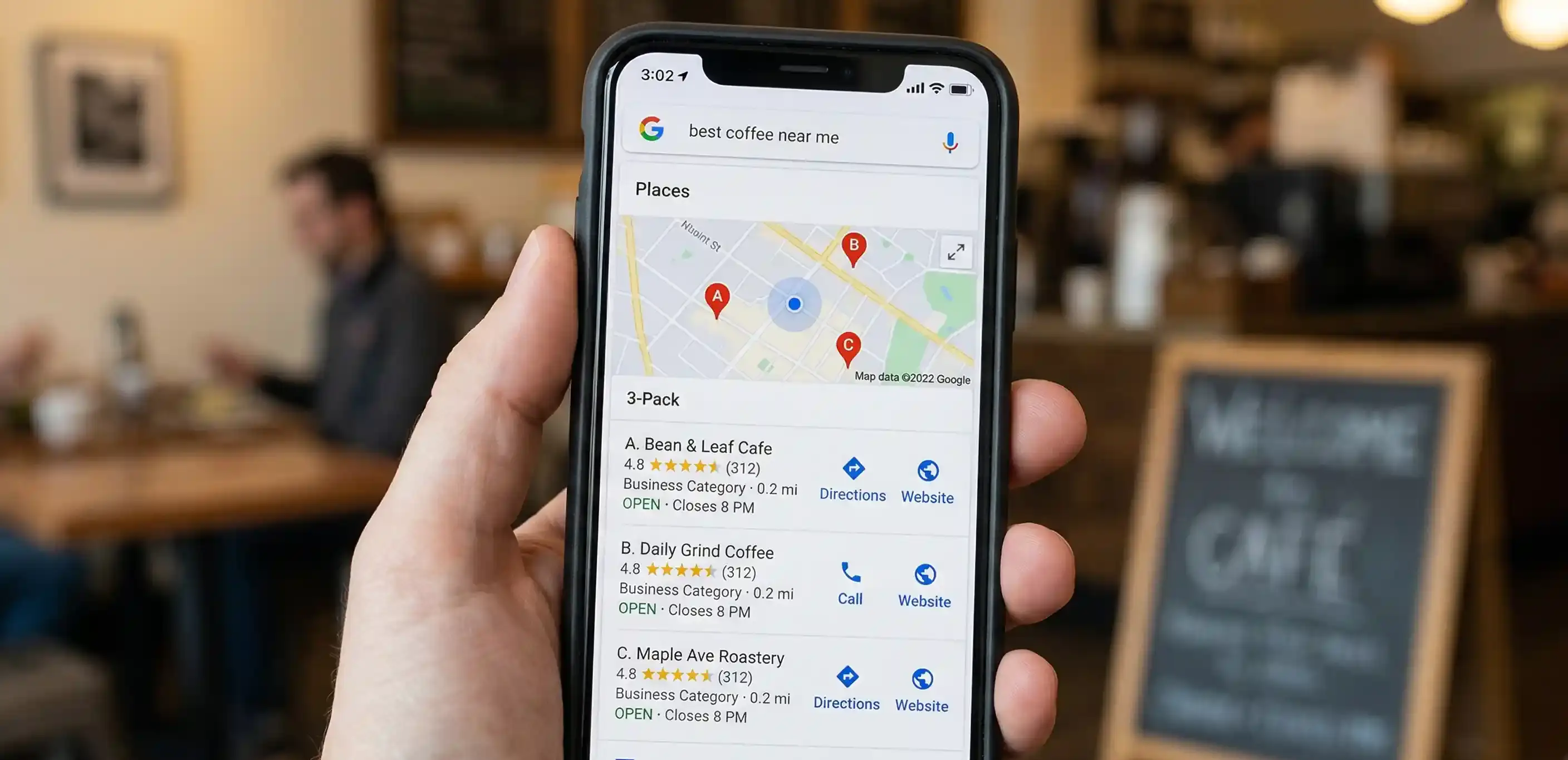
The numbers tell a compelling story. 46% of all Google searches carry local intent, and 80% of consumers search for local businesses online every week. Near me searches now exceed 1.5 billion per month and continue to climb as voice search and AI assistants make local queries more natural than ever. 76% of people who search for a local business on their phone visit a store within 24 hours, and 88% of mobile local searchers either visit or call a business within a day.
But here is what makes 2026 different: AI Overviews now appear for over 40% of local business queries, synthesizing business information, reviews, and recommendations directly in the search results. Google's local algorithm has become more sophisticated, weighing factors like review sentiment analysis, real-time business activity, and behavioral signals from Google Maps users. The businesses that invest in local SEO are seeing outsized returns, while those that ignore it are becoming invisible to their own neighbors.
For small businesses competing against larger brands with bigger budgets, local SEO is the great equalizer. A well-optimized local presence can outrank national chains in your area, driving customers directly to your door. And unlike paid advertising through Google Ads, the traffic from local organic search is free and compounds over time.
Understanding the Local Search Ecosystem
Before diving into tactics, it is important to understand where your business can appear in local search results. There are four distinct surfaces that matter:
The Local Pack (Map Pack) is the most valuable piece of local search real estate. This is the three-business listing that appears alongside a map at the top of search results for queries with local intent. Appearing in the Local Pack dramatically increases visibility, clicks, and calls. Ranking here depends heavily on your Google Business Profile, reviews, and proximity to the searcher.
Google Maps serves as a discovery platform in its own right. Millions of users open Google Maps directly to find nearby businesses, read reviews, get directions, and call businesses. Your Google Business Profile is your listing in Maps, and optimizing it is the single most impactful local SEO action you can take.
AI Overviews for local queries now synthesize information from multiple sources to present AI-generated local recommendations. These overviews consider reviews, business attributes, distance, and content signals to suggest businesses. Being cited in a local AI Overview requires strong E-E-A-T signals, something we covered extensively in our guide to SEO in the AI era, and comprehensive, accurate business information.
Local organic results appear below the Local Pack and follow traditional search engine optimization principles with a local twist. Ranking here requires solid on-page SEO, quality content with local relevance, and authoritative backlinks from local sources.
Google Business Profile Optimization: Your Digital Storefront
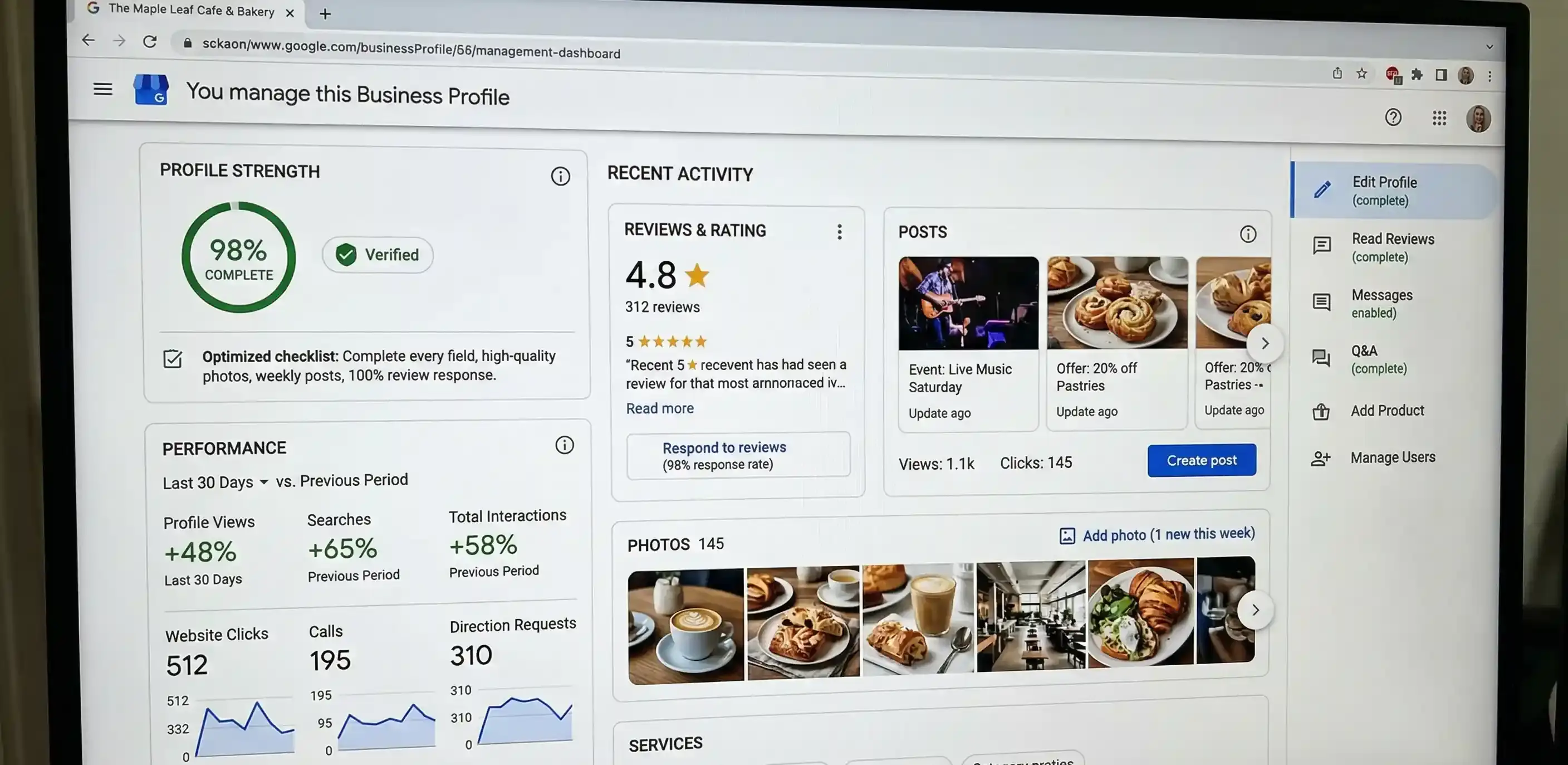
Your Google Business Profile (GBP) is the cornerstone of your local SEO strategy. Think of it as your digital storefront, because for many local customers, it is the first and sometimes only impression they get of your business. A fully optimized GBP can be the difference between appearing in the Local Pack and being invisible. Businesses with complete profiles receive 42% more direction requests and 35% more click-throughs to their websites compared to incomplete profiles.
Complete every section of your profile. Google has confirmed that profile completeness is a ranking factor. This means filling out your business name (exactly as it appears in the real world), address, phone number, website, business hours, holiday hours, business description, and every applicable attribute. Do not leave any section empty. Just as your website should have a transparent about page that builds trust, your GBP description should clearly communicate who you are, what you do, and why customers choose you.
Choose your categories carefully. Your primary category is the single most influential GBP ranking factor. It is one of the strongest relevance signals inside the platform. Select the most specific category that accurately describes your core business. Then add relevant secondary categories that reflect real services you offer. A bakery that also serves coffee should use Bakery as the primary category and Coffee Shop as a secondary, not the other way around.
Write a compelling business description. You have 750 characters to describe what makes your business unique. Include your primary services, your location, and what differentiates you from competitors. Naturally incorporate keywords your customers would search for, but write for humans first. Mention the specific areas you serve and the problems you solve.
Add products and services with detailed descriptions. The Products and Services sections of your GBP allow you to showcase specific offerings with descriptions and prices. This gives Google additional context about what your business offers and helps match your listing with specific search queries.
Post regularly and never go dormant. Google Business Profile posts are a direct signal that your business is active and engaged. Share updates, offers, events, and news at least weekly. In 2026, the decay rate of GBP visibility is faster than ever: businesses that have not posted an update or photo in over 30 days can see dramatic drops in impressions. Think of GBP posts like a mini social media strategy focused specifically on search visibility.
Upload quality photos consistently. Businesses with more than 100 photos receive 520% more calls and 2,717% more direction requests than average. Upload photos of your storefront (exterior and interior), your team, your products or service results, and your happy customers. Add new, authentic images weekly to signal freshness and showcase your community involvement.
| GBP Element | Ranking Impact | Priority |
|---|---|---|
| Primary Category | Very High | Immediate |
| Complete NAP Info | Very High | Immediate |
| Reviews (quantity + quality) | Very High | Ongoing |
| Business Description | High | Immediate |
| Photos & Videos | High | Weekly |
| Google Posts | Medium-High | Weekly |
| Products & Services | Medium | Monthly |
| Q&A Management | Medium | As needed |
| Attributes | Medium | Quarterly |
The profile deserves more room than one section can give it, so we broke the full setup out into a Google Business Profile playbook.
Local Keyword Research: Finding What Your Customers Actually Search
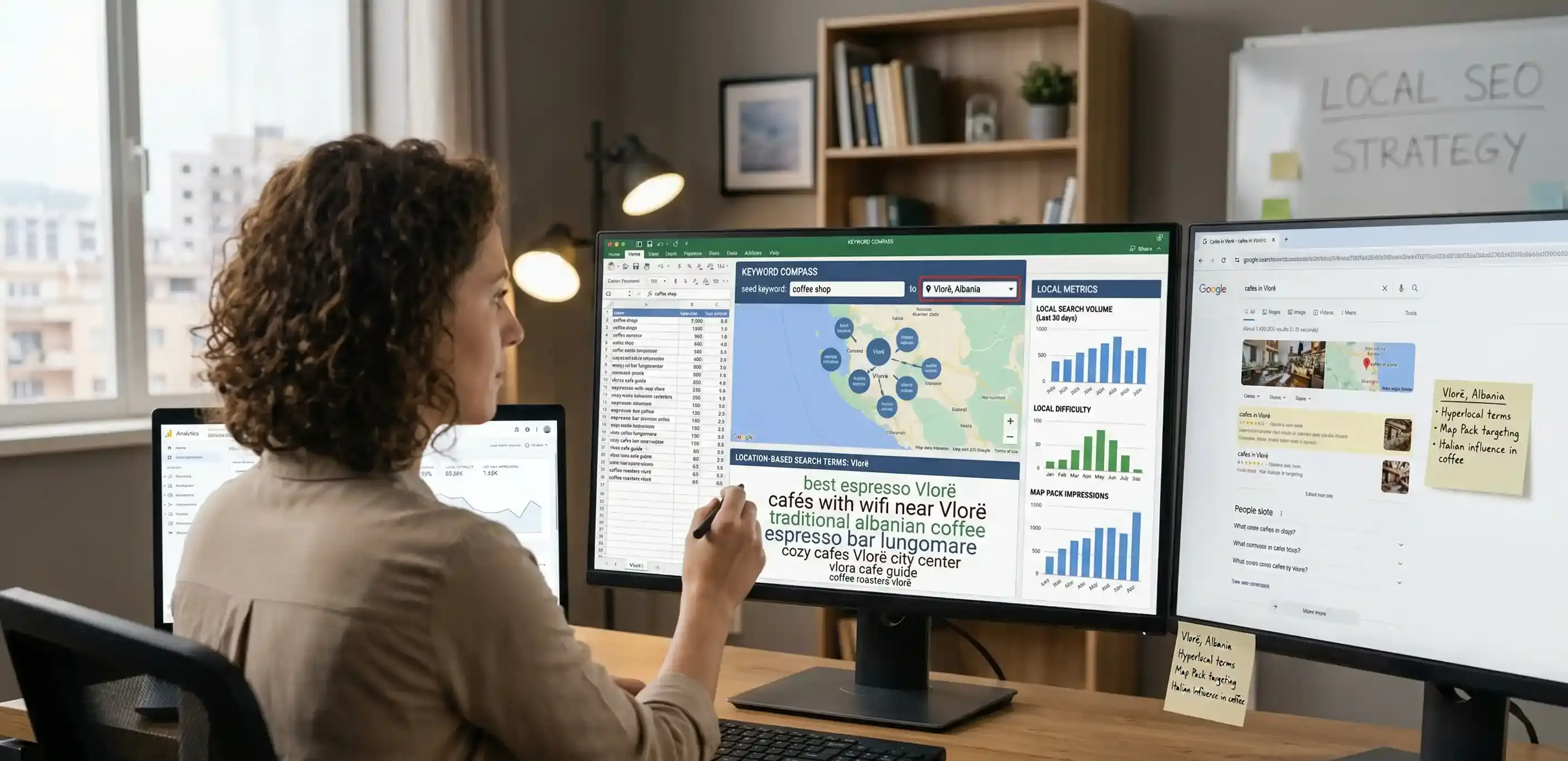
Effective local SEO starts with understanding exactly what your potential customers type into Google when looking for businesses like yours. Local keyword research differs from traditional keyword research because it must account for geographic modifiers, implicit local intent, and the specific language your community uses.
Start with your core services plus location modifiers. The foundation of local keyword research is combining what you offer with where you offer it. A plumber in Milan would target plumber Milan, emergency plumber Milan, plumbing services Milan, and variations. Extend this to neighborhoods, districts, and nearby towns you serve. Create individual landing pages for each significant service area to capture location-specific traffic.
Map near me and intent-based queries. Near me searches are powered by the searcher's GPS location, so you cannot optimize for plumber near me with a specific page. Instead, you optimize your overall local presence: your GBP, your reviews, and your location signals so that Google identifies you as the best nearby result. However, related phrases like best plumber in [area] or affordable plumbing [city] are directly targetable.
Identify long-tail local queries. These are the specific, question-based searches that reveal exactly what a customer needs: emergency boiler repair in [city] on Sunday, wedding photographer [area] under 2000 euros, Italian restaurant with private dining room [neighborhood]. Long-tail queries have lower search volume but dramatically higher conversion rates because the searcher knows exactly what they want.
Analyze your competitors' local keywords. Use tools like Google Search Console, Semrush, or Ahrefs to see which local queries drive traffic to competing businesses. Our analytics and reporting services include comprehensive competitor keyword analysis to identify gaps and opportunities you may be missing.
Do not forget voice search queries. With 76% of voice searches related to near me and local inquiries, optimizing for natural-language queries is essential. People speak differently than they type. Where can I get my laptop fixed downtown is a voice query that maps to laptop repair downtown [city]. Your content should answer these conversational questions naturally, which is a key aspect of modern AI-powered search optimization.
On-Page SEO for Local Rankings
Your website is the foundation that supports every other local SEO effort. On-page optimization for local search requires incorporating location signals throughout your site while maintaining a natural, user-friendly experience.
Optimize title tags and meta descriptions with location. Every service page should include your primary keyword and location in the title tag. Emergency Plumbing Services in Milan | [Business Name] tells both Google and searchers exactly what you offer and where. Meta descriptions should reinforce this with a compelling reason to click. The biggest mistake is writing for search engines instead of people: you do not need to repeat your keyword five times on a page. You need to explain what you actually do in a way that answers real questions.
Create dedicated location and service area pages. If you serve multiple areas, create a unique page for each one with genuinely useful, location-specific content. Do not simply duplicate the same page with different city names swapped in. Each page should include local landmarks, neighborhood-specific information, and unique content that demonstrates your presence and expertise in that area. A well-structured content management system makes managing multiple location pages significantly easier.
Implement LocalBusiness structured data. Schema.org LocalBusiness markup tells search engines your exact business name, address, phone number, hours, price range, and service area in a format they can parse unambiguously. This structured data increases your chances of appearing in rich results and helps AI systems accurately cite your business information. Our technical SEO team can implement this comprehensively across your site.
Maintain NAP consistency on your website. Your business Name, Address, and Phone number should appear identically on every page of your website, typically in the header or footer. This should match your Google Business Profile and every other online listing exactly. Even small variations like St. versus Street or different phone number formats can weaken your local signals. In 2026, even minor discrepancies create hesitation in AI models and search engine algorithms deciding whether a business is trustworthy or active.
Embed a Google Map on your contact page. An embedded map with your business location provides an additional local signal and helps customers find you. Include it on your contact page, location pages, and footer where appropriate.
Building and Managing Local Citations
Local citations are online mentions of your business name, address, and phone number on websites other than your own. They are a foundational local ranking factor because they help Google verify that your business is legitimate and confirm its location.
Prioritize the major data aggregators and directories. Start with the platforms that matter most: Google Business Profile, Apple Maps, Bing Places, Facebook, Yelp, and the major data aggregators (Foursquare, Data Axle) that feed information to dozens of smaller directories. Then expand to industry-specific directories relevant to your business.
Maintain absolute NAP consistency. This cannot be overstated. Your business name, address, and phone number must be identical across every citation. Use the exact same formatting everywhere. If your GBP lists your address as Via Roma 15, 20121 Milan, every other citation should match this character for character. Inconsistencies confuse search engines and dilute your local ranking signals.
Audit and clean existing citations. If your business has been around for a while, there are likely outdated or incorrect citations from old addresses, phone number changes, or data aggregator errors. Tools like BrightLocal and Moz Local can scan for inconsistencies. Cleaning these up can produce a noticeable ranking improvement.
Build industry-specific citations. Beyond general directories, list your business on platforms specific to your industry. Restaurants should be on TripAdvisor and local food blogs. Contractors should be on HomeAdvisor and trade association directories. Healthcare providers should be on Healthgrades and Vitals. These niche citations carry extra weight because they demonstrate industry relevance.
The Power of Reviews: Your Best Local SEO Asset
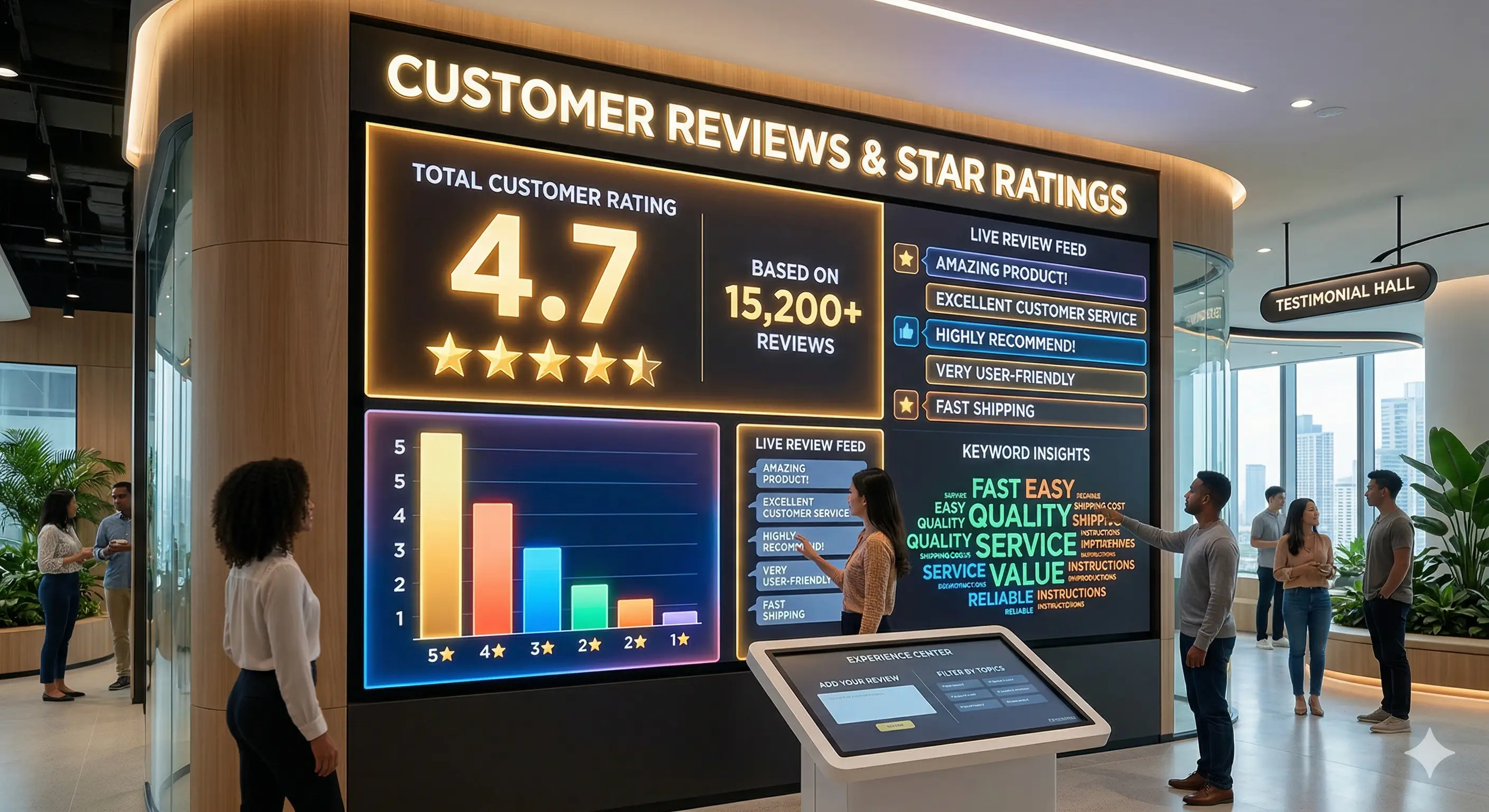
Online reviews are the most powerful local ranking factor you can actively influence. Google's local algorithm weighs review quantity, quality, velocity, and diversity heavily. But reviews are more than a ranking signal: they are the primary trust mechanism for local customers deciding between businesses. In 2026, review velocity matters more than lifetime totals, because Google prioritizes recent trust signals over historical volume.
Implement a systematic review generation process. The businesses with the most reviews are not necessarily better; they simply ask more consistently. Create a post-service workflow that requests reviews at the moment of highest customer satisfaction. Send a follow-up email or SMS with a direct link to your Google review form using your email marketing tools. Make it as frictionless as possible.
Respond to every review. Google has confirmed that responding to reviews is a ranking factor. More importantly, your responses are visible to every potential customer reading your reviews. Thank positive reviewers specifically, referencing details of their experience. For negative reviews, respond professionally, acknowledge the issue, and offer to make it right. Your response to a negative review often matters more than the review itself.
| Review Factor | SEO Impact | Customer Impact |
|---|---|---|
| Total review count | High | High (social proof) |
| Average star rating | High | Very High (decision factor) |
| Review recency | High | Medium |
| Review velocity (rate) | Medium-High | Low |
| Review responses | Medium | High (trust signal) |
| Review keywords | Medium | Low |
| Review diversity (platforms) | Medium | Medium |
Leverage review content for SEO. When customers mention specific services, products, or locations in their reviews, it creates keyword-rich content associated with your business listing. Encourage reviewers to mention what service they received and their specific experience. This natural keyword inclusion helps Google understand what your business is known for.
Document your results and showcase social proof. The best reviews become powerful marketing assets. Feature them on your website and weave them into case studies that demonstrate the real impact of your work. Genuine customer experiences build trust faster than any marketing copy, and they give potential clients confidence before they ever pick up the phone.
Local Link Building: Community-Driven Authority
Backlinks remain a critical ranking factor for local search, but local link building looks different from traditional off-page SEO. The most valuable local links come from organizations and publications rooted in your community.
Partner with local businesses for mutual promotion. Non-competing businesses that serve the same audience are natural link partners. A wedding photographer can partner with venues, florists, and caterers for mutual website features and recommendations. These reciprocal relationships create authentic links that strengthen everyone's local authority.
Sponsor local events and organizations. Community involvement is not just good citizenship; it is effective link building. Sponsoring local sports teams, charity events, school programs, or cultural festivals typically earns you a link from the organization's website. These locally authoritative links send strong geographic relevance signals to search engines.
Get featured in local media and blogs. Local newspapers, magazines, and blogs are always looking for stories. Offer expert commentary on topics related to your industry, share data about local trends, or pitch stories about your community involvement. A single link from a respected local news outlet can significantly boost your local rankings.
Join your Chamber of Commerce and trade associations. Membership in local business organizations typically includes a directory listing with a link to your website. These are authoritative, location-specific links that directly reinforce your local relevance.
Create linkable local resources. Develop content that other local businesses and organizations want to link to. This could be a comprehensive guide to your city, a local event calendar, a resource list for new residents, or industry-specific information relevant to your area. When your website becomes a genuine local resource, links follow naturally.
Local Content Strategy: Becoming Your Area's Go-To Resource
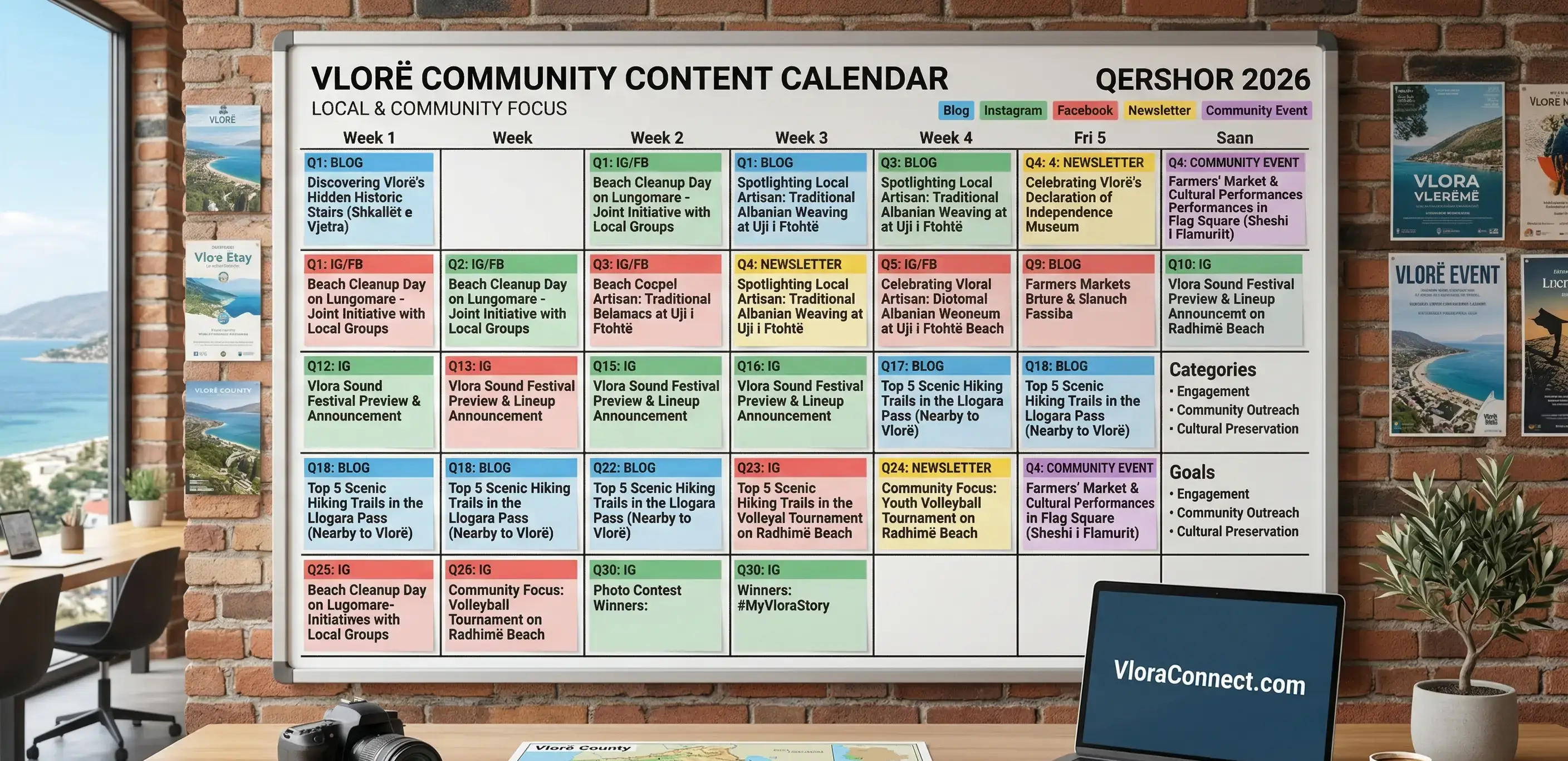
Content is what connects your local SEO tactics into a cohesive strategy. A strong content marketing approach focused on local topics establishes your business as the definitive authority in your geographic market.
Write about local topics your audience cares about. Go beyond generic industry content and create pieces that are specifically relevant to your community. A real estate agent should write neighborhood guides. A restaurant should cover the local food scene. An accountant should explain city-specific tax implications. This hyperlocal content naturally incorporates geographic keywords and attracts local links and engagement.
Create comprehensive service area pages. Each area you serve deserves its own page. Go deeper than basic descriptions: include information about the area itself, common issues specific to that location, and testimonials from customers in that area. This level of specificity signals genuine local expertise. Our content writing services can help you develop location pages that rank and convert.
Cover local events and community news. Publishing content about local events, charitable initiatives, or community developments shows both search engines and potential customers that your business is genuinely embedded in the community. This is also excellent content for your social media channels and email marketing campaigns that drive traffic back to your site.
Develop a content calendar with local focus. Consistency matters for both SEO and audience building. Plan your local content at least a month ahead, aligning it with local events, seasonal trends, and your business calendar. A steady stream of fresh, locally relevant content signals to Google that your site is active and authoritative in your market. As we outlined in our digital marketing guide for SMEs, consistency is what separates businesses that grow from those that stagnate.
Leverage your blog for internal linking. Every local content piece is an opportunity to link to your service pages, location pages, and other relevant blog posts. As we covered in our comprehensive SEO guide, internal linking distributes authority and helps search engines understand your site's topical structure. A blog post about preparing your home for winter in [city] should naturally link to your relevant service pages.
If you want to move faster on the research and content side of this, AI can take on a good share of the work once these fundamentals are in place.
Technical SEO for Local Performance
The technical foundation of your website directly impacts your local search visibility. All the technical SEO fundamentals apply, with additional considerations specific to local search.
Mobile performance is non-negotiable. With 84% of local searches happening on mobile devices and local mobile searches growing 50% faster than overall searches, your site must load fast, be easy to navigate with a thumb, and have click-to-call functionality prominently displayed. Core Web Vitals, as we covered in our web design trends guide, are the benchmarks to hit. If your site is not mobile-optimized, investing in a website redesign or a custom mobile-first build should be your first priority.
Site speed directly impacts local conversions. A local searcher is typically ready to act immediately. If your site takes more than three seconds to load, over half of those potential customers will leave and call your competitor instead. Optimize images, minimize JavaScript, and use a CDN to ensure fast load times regardless of the user's device or connection.
Implement comprehensive structured data. Beyond the LocalBusiness schema mentioned earlier, consider adding FAQ schema for common questions, Service schema for your offerings, and Review/AggregateRating schema to display star ratings in search results. For businesses selling products locally through an e-commerce platform, Product schema can unlock rich results that drive clicks. Structured data gives you a technical advantage that many local competitors still neglect.
Secure your site with HTTPS. This is table stakes in 2026, but surprisingly, many small business websites still lack proper SSL certificates. HTTPS is a confirmed ranking factor, and browsers actively warn users about insecure sites. No customer wants to fill out a contact form on a site their browser flags as Not Secure.
Building out the pages themselves is a topic of its own, covered in service area pages that actually rank.
Measuring Local SEO Success
Local SEO Performance Metrics That Matter
You cannot improve what you do not measure. An effective analytics and reporting setup for local SEO should track these key metrics, and our analytics and KPI guide covers the broader measurement framework in detail.
Google Business Profile Insights shows how customers find and interact with your listing: search queries that triggered your listing, how many people viewed your profile, clicked for directions, visited your website, or called you directly. Monitor these metrics monthly to identify trends and opportunities.
Local ranking tracking monitors your position in both the Local Pack and local organic results for your target keywords. Use a tool that tracks rankings from your specific geographic area, as local results vary significantly by location. Check rankings from multiple points within your service area to get an accurate picture.
Review metrics include your total review count, average rating, review velocity (new reviews per month), and response rate. Set targets for each and track progress. Reviews are both a ranking factor and a conversion factor, and staying on top of your review profile ensures you never miss an opportunity to strengthen your reputation.
Conversion tracking connects your local SEO efforts to actual business outcomes. Track phone calls (using call tracking numbers if needed), contact form submissions, direction requests, and in-store visits attributable to search. This data justifies your local SEO investment and identifies which tactics deliver the highest ROI. For e-commerce businesses with a local presence, also track local online orders and in-store pickup conversions.
Your Local SEO Action Plan
| Priority | Action | Timeline | Expected Impact |
|---|---|---|---|
| 1 | Claim & optimize Google Business Profile | Week 1 | Very High |
| 2 | Audit & fix NAP consistency | Week 1-2 | High |
| 3 | Implement LocalBusiness structured data | Week 2-3 | High |
| 4 | Set up review generation process | Week 3-4 | Very High |
| 5 | Local keyword research & on-page optimization | Month 2 | High |
| 6 | Build core local citations | Month 2-3 | Medium-High |
| 7 | Create location/service area pages | Month 3-4 | High |
| 8 | Launch local content strategy | Month 4+ | Medium (compounds) |
| 9 | Begin local link building | Month 4+ | Medium-High |
| 10 | Set up tracking & reporting | Week 1 (ongoing) | Foundation |
Local SEO is not a one-time project. It is an ongoing strategy that compounds over time. The businesses that dominate local search are those that consistently optimize their Google Business Profile, generate reviews, publish local content, and build community connections month after month.
Start with the highest-impact actions: claim and fully optimize your Google Business Profile, ensure your NAP is consistent everywhere, and implement a review generation process. These three steps alone can produce significant ranking improvements within weeks.
Then build your foundation: conduct thorough local keyword research, optimize your website pages for local search, and build citations on the most important directories. Create location-specific landing pages for each area you serve.
Finally, invest in long-term growth: develop a local content strategy, build relationships for local links, and engage with your community both online and offline. Connect your local SEO with your broader digital marketing strategy for maximum impact, leveraging social media to amplify your reach and content marketing to build topical authority in your area.
Local SEO remains the most cost-effective marketing channel for small businesses in 2026. Every improvement you make compounds over time, building a local presence that becomes increasingly difficult for competitors to replicate. If you need help developing or executing your local SEO strategy, our dedicated local SEO team can conduct a comprehensive audit and create a customized plan for your business. Contact us for a free estimate and let us put your business on the local map.