


"How much does a website cost?" is the first question almost every business owner asks — and the honest answer is: it depends, but probably less than you fear. In 2026, a professional small-business website typically costs $3,000–$15,000 in the United States, while in Europe the same project often runs €800–€5,000. The reassuring part: most small businesses spend well under $10,000. According to Clutch's 2026 survey, 61% of small businesses paid less than $10,000 for their most recent website, and 84% spent under $20,000.
The numbers in this guide come from published agency rates and independent industry pricing data — not from our own quotes — so you can use them to benchmark any proposal you receive. Whether you're planning a simple brochure site or a full custom website, here's what you should realistically expect to pay, what moves the price, and the recurring costs almost nobody mentions upfront.
What a website costs in 2026: the quick breakdown
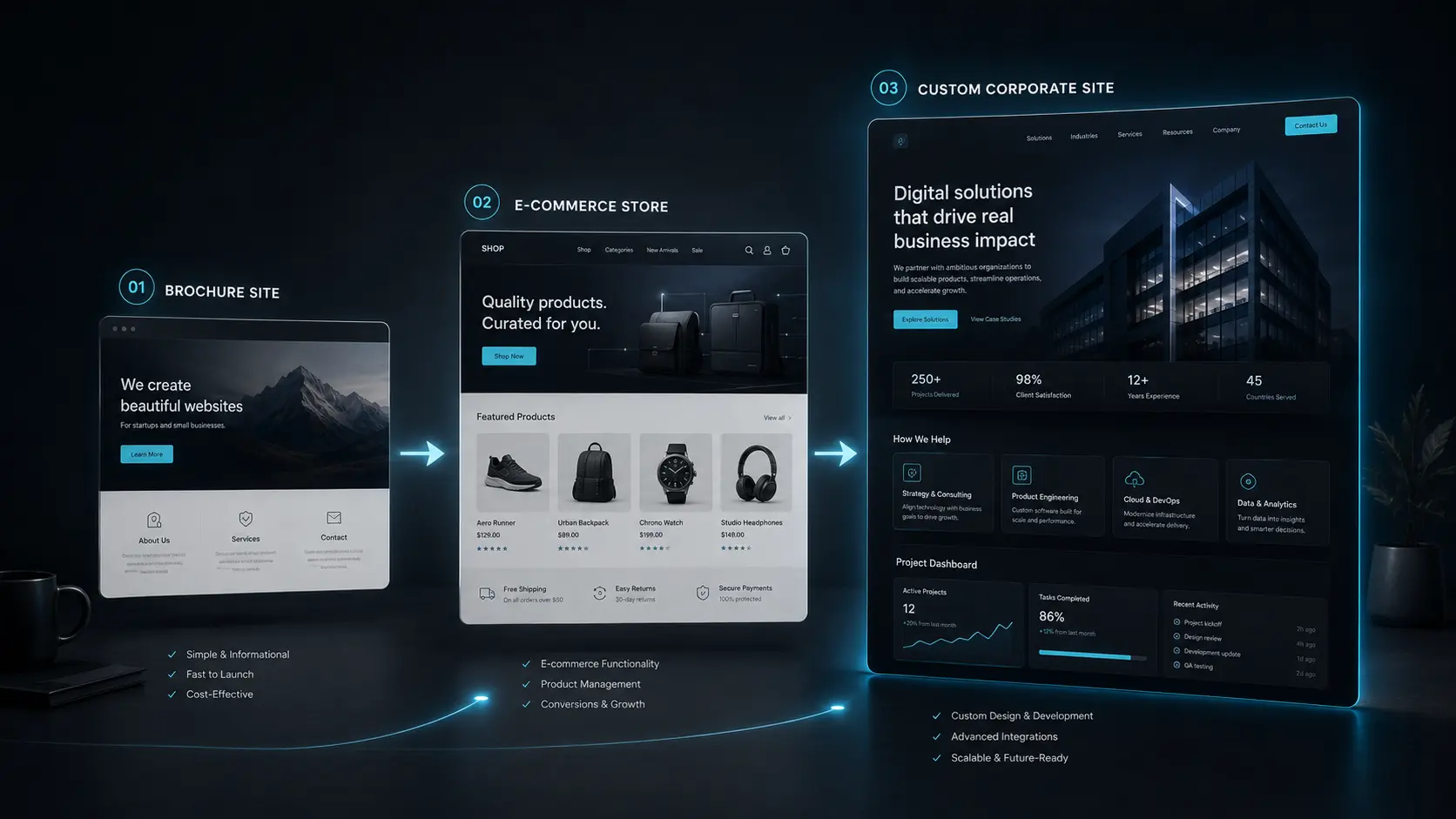
Website pricing falls into three broad tiers, regardless of who builds it. The table below shows typical professional (freelancer or agency) prices in the US market. DIY website builders like Wix, Squarespace, and Shopify sit below this, at roughly $17–$50 per month.
| Website type | Typical price | What's included |
|---|---|---|
| Brochure / small business (5–10 pages) | $3,000–$15,000 | Custom design, responsive layout, contact forms, basic SEO |
| E-commerce store | $2,000–$25,000 | Product catalog, payments, shipping, inventory |
| Corporate / custom build (20+ pages) | $8,000–$30,000+ | Bespoke design, integrations, CMS, advanced functionality |
A single landing page can be as little as $500–$5,000, while a fully custom Shopify Plus or headless e-commerce platform can exceed $45,000. But for the vast majority of small and medium businesses, the realistic range is $2,000–$8,000 — comfortably under the $10,000 mark that the data shows most companies actually spend.
What actually determines the price
Where your website budget typically goes
The single biggest cost driver is how custom the work is. A template-based site reuses an existing design and is cheap; a bespoke design built around your brand takes far more time. After that, the price scales with the number of pages, whether you need e-commerce or special functionality (booking systems, member areas, integrations), how much content and copywriting has to be produced, the number of languages, and the number of revision rounds. Two quotes for "the same website" can differ by 5× simply because one includes custom design, SEO, and content while the other is a template filled with stock text.
The recurring costs nobody warns you about
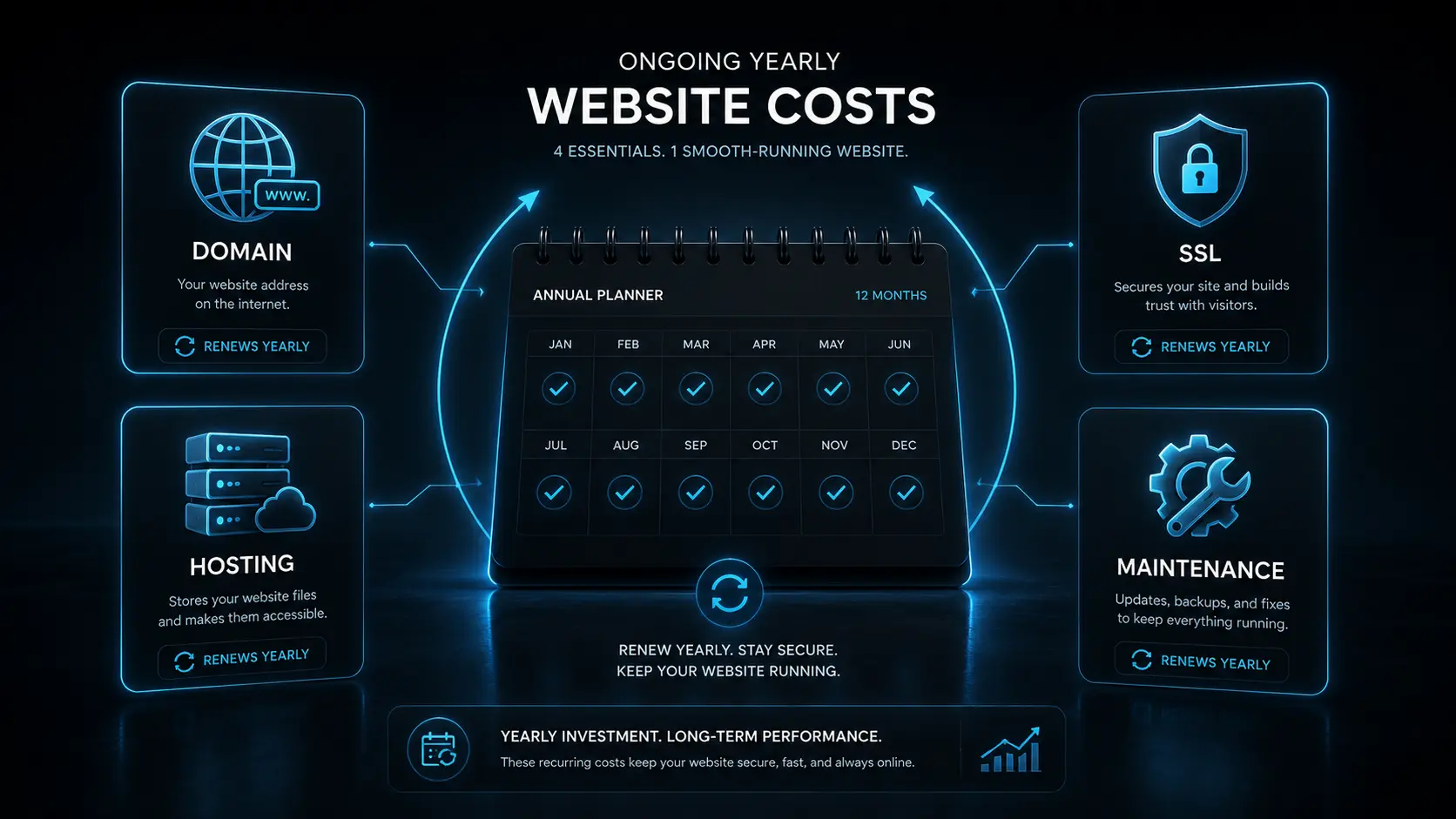
The build price is only part of the picture. Every website carries ongoing costs that should be in your budget from day one:
| Recurring item | Typical cost |
|---|---|
| Domain name | $10–$20 / year |
| Hosting | Under $100/yr (shared) up to $500–$2,000/yr |
| SSL certificate | Free–$10/yr (often bundled) |
| Maintenance & support | $50–$500 / month |
As a rule of thumb, budget for ongoing costs equal to roughly 15–25% of the build price each year to cover hosting, security updates, backups, and small changes. A site that's never maintained slowly breaks, falls behind on security, and loses search rankings.
Freelancer, agency, or DIY builder?
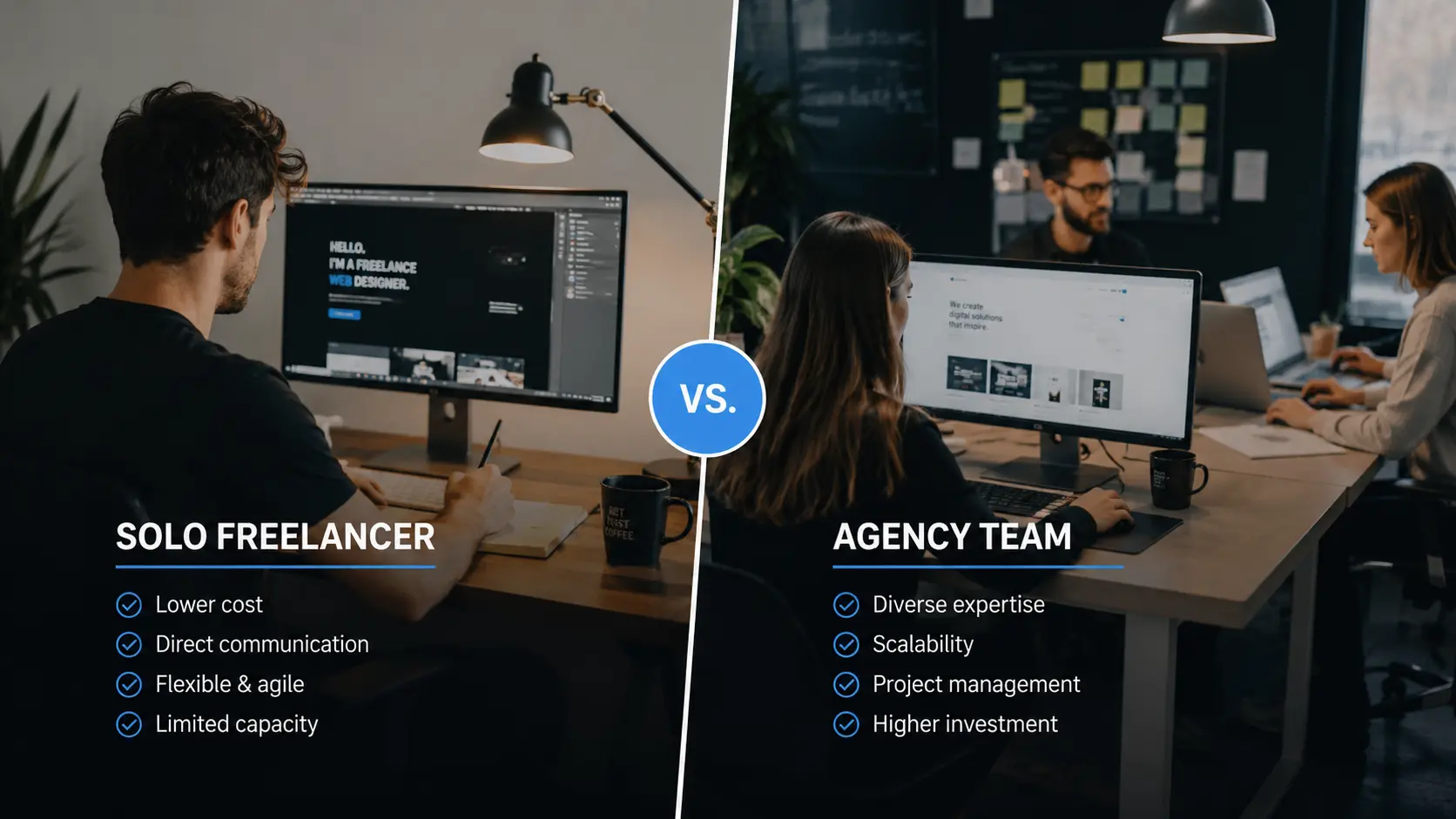
DIY builders (Wix, Squarespace, Shopify) are the cheapest way to get online — around $17–$50/month — but you do all the work, and you'll hit limits as you grow. Freelancers typically charge $50–$150/hour and cost less than an agency, but reliability, availability, and breadth of skills vary widely. Agencies cost more because you're paying for a team — designer, developer, SEO specialist, project manager — plus contractual guarantees and ongoing support. The right choice depends on your budget, your timeline, and how mission-critical the site is to your revenue.
How to read a quote and avoid overpaying

Price alone tells you very little. Before you sign, watch for these red flags: a one-line quote with no breakdown; no mention of who owns the code and domain when the project ends; a suspiciously cheap headline price with hidden add-ons; no maintenance plan; and vague timelines or unlimited "revisions" that are never actually defined.
A serious proposal is itemized: it separates design, development, content, and SEO; it states exactly what's included and what costs extra; it confirms that you own your domain and code; and it gives a realistic timeline with milestones. That transparency is exactly how we structure every free estimate — so you can compare proposals apples to apples.
What we'd recommend
Start by deciding what the site needs to *do* — generate leads, sell products, or simply establish credibility — then get two or three itemized quotes and compare scope, not just price. If you want a benchmark, look at real projects in our case studies, or request a transparent, no-obligation breakdown for a custom website built around your goals. Knowing the real market numbers is the best protection against both overpaying and buying something too cheap to do the job.