


A construction website that generates better enquiries does one job well: it helps the right clients recognise that you are the right builder before they call. Prospective clients need to see which projects fit your team, what you have actually delivered, where you work and how a first conversation becomes a scoped, priced job. When those answers are clear, fewer unsuitable requests reach your estimator, and the ones that do arrive with the information needed to respond properly.

Why do construction websites attract the wrong enquiries?
Most poor-fit enquiries trace back to the website rather than the market. A homepage that lists every trade, a gallery without context and a form that asks only for a name and message invite everyone, from a small repair to a project far outside your area. Your team then spends hours on calls that were never likely to proceed.
A longer form rarely fixes this. Clearer information earlier in the journey does, because visitors can then rule themselves in or out. If your site gets traffic but few worthwhile requests, the common reasons a website gets visits but no enquiries are worth checking first.
Organise the site around the projects you want
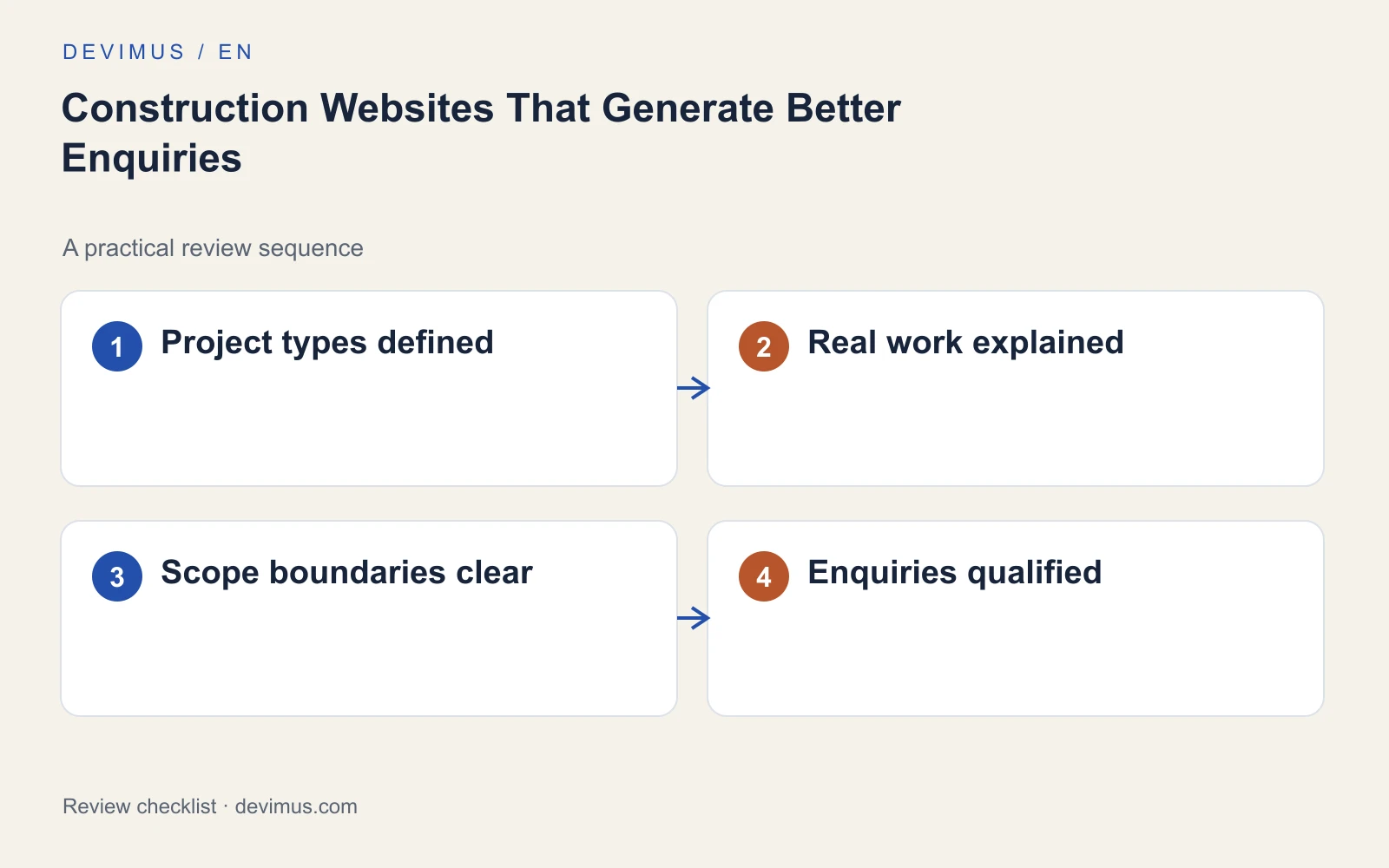
Separate services that have different buyers and requirements, such as extensions, renovations, new builds and commercial fit-outs. Give each its own page that explains scope, typical stages, who the client usually is and what you need from them. A service page built for people ready to hire answers those buying questions directly instead of listing capabilities.
State your geographic coverage and the stages you handle. Explain whether you provide design, work from supplied drawings or collaborate with architects and other specialists. If you work across several towns, local SEO helps searchers in those areas reach the right service page. Do not claim capabilities or accreditations you lack because they are popular search terms: a page that attracts projects you cannot deliver creates work without creating opportunity.
How should you present project photos and case examples?
Use genuine images with permission and explain the brief, constraints and work performed. Before-and-after pictures need context: what changed, what stayed and why. Describe your actual responsibility rather than implying you delivered every part of a larger project, and keep illustrative visuals clearly separate from completed client work.
A useful project entry covers:
- The starting situation and what the client wanted to achieve
- Constraints that shaped the work, such as access, existing structure or a tight programme
- What your team was responsible for, and what others delivered
- Approved photos with captions that explain what the reader is looking at
- The project type and general area, without exposing private addresses
Choose examples that match the work you want next. If you want larger commercial projects but show only small domestic repairs, the portfolio sets a different expectation. This kind of first-hand detail is also what Google’s guidance on helpful, people-first content asks site owners to demonstrate.
Qualify enquiries without overwhelming visitors
Ask about location, project type, current stage and intended timing. Those four answers tell your estimator most of what they need to prioritise a request. Offer an optional upload for drawings only if you can handle files securely, and do not make detailed documents mandatory before the visitor knows you are a plausible fit.
Explain the next step and who will respond: an initial call, a document review or a site visit. Avoid promising a final price before the scope is understood. Clear labels and error messages matter too; the W3C forms accessibility tutorial is a practical reference for forms everyone can complete.
Should a construction website show prices?
Only where the scope genuinely supports it. For most building work, price depends on design, specification, site conditions and timing, so a fixed figure on the website would mislead. A better approach is to explain the factors that move an estimate and the information you need before a meaningful figure is possible.
Some firms publish guide prices for well-defined services, such as a standard survey or a fixed-scope repair. If you do, state what is included and what would change it. Either way, explain how your estimating process works, so serious clients know what to prepare.
It also helps to publish a short outline of how a project runs with you: first conversation, site visit, design or drawings, detailed estimate, contract and start date. Buyers who understand the sequence ask better questions, and those who need something faster or different can see that early. Keep the outline general enough to stay accurate across projects.
Connect enquiries to the work you win
Agree how enquiries reach the estimator or project lead and what that person needs. Then review which requests lead to worthwhile discussions and which repeatedly fail on project type, location or readiness. A simple setup to track forms, calls and qualified leads is enough to see the pattern.
Use those patterns to improve service descriptions and form guidance rather than simply adding required fields. The objective is a better match between the projects you advertise and the projects your team can deliver, not a bigger inbox. Share the findings with whoever answers the phone, because they usually hear the same gaps first.
An example to apply
Illustrative scenario, not a client case study.
A homeowner with planning-approved drawings needs a different first conversation from someone still exploring whether an extension is possible. Let the enquiry form identify that stage with a simple choice. Route the first request to the estimator with an invitation to upload drawings, and send the second a short explanation of what to prepare before a detailed estimate. This is useful qualification, not simply another required field.
Discuss your project
Show Devimus the project types you want more of and the portfolio material you already have. We will plan a website that helps suitable clients understand your work and prepare a useful enquiry.
Explore the relevant service · Request a free estimate